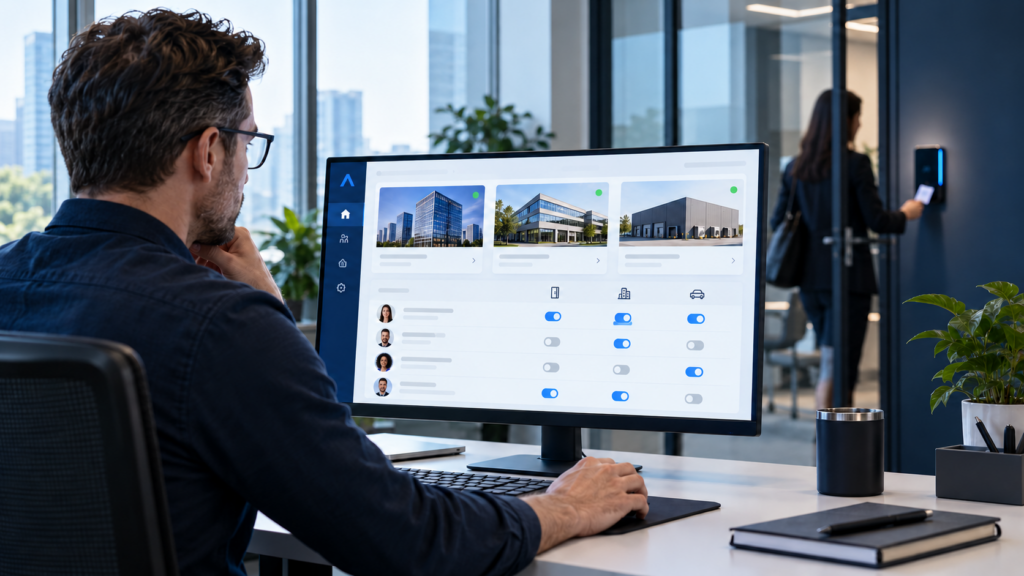
What Are the Best Visitor Management Systems for Warehouses?

Short answer: The best warehouse visitor management system records who arrived, why they are on site, who approved the visit, where they may go, and when their access ends. It must keep people moving through the right entrance while supporting the facility’s safety rules, temporary credentials, emergency procedures, and reporting needs.

A warehouse can receive delivery drivers, service contractors, vendors, auditors, customers, and guests in a single shift. A process designed for a quiet office lobby can create a line at a guardhouse or leave a busy dock without a reliable visit record. This guide gives operations, facilities, IT, and security teams a vendor-neutral way to compare systems around the work they need to manage.

What should a warehouse visitor management system do?

A warehouse visitor system should register a visit from arrival through departure, connect the visitor to a host or business purpose, and limit access to the areas and times that apply. It should also help the facility know who is on site during an emergency.

Start by listing the people who arrive. A carrier driver may need to check in and move to a designated dock. A maintenance contractor may need a safety orientation, an escort, and access to a restricted room. An auditor may need a scheduled host and permission to enter specific offices. A customer may need a short visit in a controlled area.

Those visits should not all follow the same path. Decide what information the site needs for each visitor type, who approves the visit, what safety instruction applies, and whether the person receives a credential. Set an expected departure time or an end condition so an open visit does not remain active indefinitely.

The system should answer practical questions without reconstructing the day from paper: Who is here now? Who approved the visit? Which entrance did the person use? What credential was issued? Was the visit closed? Who should be contacted if the host is unavailable?

OSHA says warehouse employers should have an emergency plan that describes how to account for workers and visitors. OSHA’s warehousing hazards and solutions guidance also identifies unauthorized access and workplace violence as issues that may warrant consideration in a warehouse emergency plan. A visitor system can support the headcount and access record, but the emergency procedure still needs an owner and practice.

Which types of visitor systems can fit a warehouse?

Warehouses use staffed desks, guardhouse workflows, self-service kiosks, mobile pre-registration, remote approval, or a mix of these approaches. Choose the path that fits each entrance, traffic level, staffing pattern, and visitor type.

Check-in approachWhere it can fitWhat to test
Staffed reception deskA site with a main lobby and a manageable visit volumeWhether the desk can handle shift changes and whether the host responds quickly
Guardhouse or gate workflowA property where vehicles arrive before the building entranceHow drivers are identified, routed, and recorded without blocking traffic
Self-service kioskA site with a clear arrival point and repeatable visit typesAccessibility, language needs, badge printing, and what happens when a visitor needs help
Pre-registration with arrival confirmationSites with scheduled vendors, contractors, or auditsHow an expected visit is matched to the person who arrives and how changes are handled
Remote approvalAn entrance without a staffed desk at every hourWho receives the request, how identity is checked, and how the visitor is kept from entering before approval
Hybrid workflowA multi-site operation with different buildings and traffic patternsWhether central rules can allow documented site-specific steps

A system can support more than one method. A large distribution center may use a gatehouse for drivers, a lobby kiosk for scheduled visitors, and staff approval for contractors. The team should be able to see the same visit record across those paths, with consistent fields and permissions.

Do not assume a kiosk will solve a staffing problem by itself. A visitor may arrive without a phone, with a language need, or outside the expected process. A line may form when several carriers arrive together. Decide who responds when a visitor needs help and how the site handles the system being offline.

What features matter most for warehouse visitors?

Compare the features that affect throughput and control: quick arrival, accurate host approval, site-specific instructions, limited credentials, visit closure, emergency reporting, and useful records. The right system lets routine visits move while giving unusual visits a clear path for review.

Arrival and identity checks

Set an arrival process for each visitor type. Some facilities may need a name, company, host, reason for visit, and expected area. Another may need a vehicle or delivery reference. Do not collect information simply because a form allows it. Decide what the facility needs, who may see it, how long it remains, and how it is protected.

Use an identity check that matches the risk and policy for the visit. The method may differ for a pre-approved carrier, a contractor entering a restricted room, or a guest meeting a host. Have legal and privacy staff review any collection of identity documents or sensitive personal data.

Host and approval workflow

A visitor should have a responsible host or a defined operating contact. The system should notify that person, record the approval, and show what happens if the host does not respond. A message sent to an unattended inbox is not an approval process.

Define a fallback for early arrivals, late arrivals, host absence, and unscheduled service calls. The facility may require a manager or guard to review the visit. Set the same decision rules across locations where practical, then document exceptions.

Safety instructions and escorts

Visitor management should connect check-in to the safety instructions that apply at the site. A driver may need to remain in a designated area. A contractor may need site orientation, hazard information, or personal protective equipment before work begins. A visitor system can record that a step was completed, but the employer must define and deliver the actual instruction.

OSHA’s guidance on communication between host employers and contractors describes the importance of communicating nonroutine and emergency hazards and procedures. The facility should decide who provides that information and how the team confirms the visitor received it.

Temporary credentials and doors

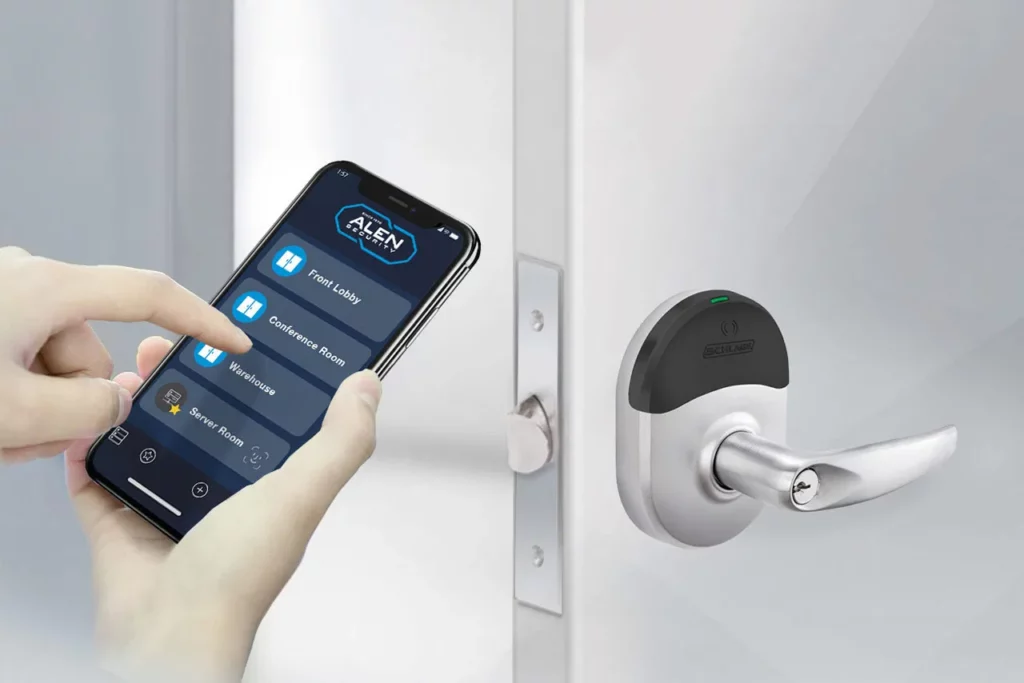
If a visitor receives a badge, card, code, or other credential, tie it to the visit and limit it by site, door, schedule, and expiration. A printed name badge does not control a door. If the facility uses electronic access, confirm that a visitor credential opens only the approved openings and stops working when the visit ends.

Test how the process handles a lost badge, a visitor who needs to move to another area, and an assignment that runs past its scheduled end. A system should make it clear who can extend access and what record remains.

Departure and emergency reporting

The visit record should close when the visitor leaves. If the site has multiple exits, decide how departure is recorded and what happens when a person forgets to check out. Give the emergency lead a current way to identify visitors and their affiliation.

The system’s roster is not a headcount until it is part of the emergency procedure. Train the people who gather information during an evacuation and test the process. Make sure the record can be reached if the network is down or the front desk is unavailable.

How should visitor management work across warehouses?

Use one central set of visitor types, approval roles, credential rules, and report fields, then document site differences such as a guardhouse, separate dock entrance, or restricted storage area. Central administration helps the team support a growing facility network without forcing every building to use identical doors.

A multi-site operation should not create a different process at each location unless the building requires it. Give locations consistent names. Set the same rule for temporary credential expiration. Use the same visit statuses. Train a new site manager to follow the same steps as the team at the first facility.

At the same time, a central rule should not erase a real local need. One warehouse may have a staffed gate and another may use a reception desk. One may have a high-security cage or cold storage zone. Make the local difference visible in the user’s path and the site’s instructions.

Alen Security’s guide to warehouse visitor management at high-volume sites discusses standard visitor flows and multi-site administration. Its guide to standardizing access control across different locations explains how a shared management model can account for local door conditions.

How should IT review a warehouse visitor platform?

Treat visitor management as a networked system that stores personal and operational information. IT should review its accounts, devices, data flow, updates, integrations, remote access, logs, and support path before the system is connected.

A visitor platform may involve kiosks, tablets, printers, badge readers, access controllers, cloud services, and the business network. Give IT a diagram that shows each component and the traffic between them. Identify who owns each device, who approves user access, and who is responsible for updates.

Ask whether the service needs inbound open firewall ports. Alen Security emphasizes cloud system designs that avoid unnecessary inbound firewall holes. The facility’s IT team should still review the actual architecture, outbound connections, administrator authentication, encryption, logging, and data retention.

Use individual administrator accounts and multifactor authentication where the platform supports it. Remove access when staff change roles or leave. Restrict who can change visitor rules, export visit records, or edit access profiles. Test how the kiosk or check-in tool behaves if its internet connection is interrupted.

A simple system is easier to use, but ease should not mean shared credentials or broad permissions. Give reception and guards the functions they need, give central administrators the settings they own, and keep system support access documented and limited.

How do you compare warehouse visitor management systems?

Score each option against the same site scenarios, then verify the result at a busy entrance. A vendor-neutral scorecard helps operations compare arrival speed, approvals, safety, temporary access, emergency reporting, administration, and support without relying on brand claims.

CriterionTest questionEvidence to request
Traffic flowCan the check-in path handle a normal arrival rush?Live test using several visitor types
Visitor typesCan drivers, contractors, vendors, and guests follow the right path?Separate workflows with correct instructions
Host approvalDoes the system show who approved the visit?Approval record and no-response fallback
SafetyCan the visit include the required site instructions?Demonstration of the step and completion record
AccessCan a temporary credential be limited and expired?Test at a real reader or controlled entrance
Emergency useCan the site identify who is on property?Current roster and offline or outage procedure
PrivacyCan the organization limit collected data and access?Field settings, roles, retention, and export controls
Multi-site supportCan central staff see activity across the locations they manage?Demonstration with different site rules
ServiceWho supports the workflow after installation?Named service route and escalation process

Use at least three scenarios in the demo. First, a scheduled carrier arrives during a shift change. Second, an unscheduled contractor needs to enter a restricted area. Third, a visitor leaves through a different gate and the facility needs to confirm departure. Watch the full path from arrival to closed visit.

Then repeat one scenario at a second warehouse. The system should keep the organization’s rules consistent while showing local instructions. Ask the provider to show a network interruption, a lost badge, a host who does not respond, and a visitor whose work runs late.

What should a warehouse deployment include?

A deployment should include a site walk, defined visitor workflows, network review, safety instructions, credential rules, training, a pilot, and a closeout process. Assign an owner to every task so the system does not depend on one person remembering the steps.

  1. Map arrival points. Document gates, employee entrances, reception, dock entrances, and after-hours paths.
  2. Group visit types. Define separate steps for drivers, contractors, vendors, auditors, guests, and emergency personnel.
  3. Set the approval rule. Name the host or operating role that accepts each visit and the fallback if no one responds.
  4. Connect safety and access. Identify required instructions, escorts, credentials, doors, schedules, and expiration times.
  5. Review data and network use. Confirm what information is collected, who can view it, how long it is stored, how the system connects, and who updates devices.
  6. Pilot during a busy period. Test a shift change or delivery rush and measure where people wait or need help.
  7. Train staff by role. Practice approvals, check-in, check-out, lost badges, offline procedures, and emergency roster access.
  8. Review after launch. Check open visits, expired credentials, failed notifications, exceptions, and support requests. Adjust the process and repeat it at the next site.

The pilot should include the people who actually use the entrance. Ask guards, reception staff, dock employees, and supervisors to report where the steps slow down or create confusion. The screen may look clear to an administrator and still be difficult for a visitor under time pressure.

What mistakes should you avoid?

Avoid treating every visitor like an office guest, relying on a badge that does not control access, collecting more data than the site needs, and assuming a digital roster automatically supports emergency response. The system has to reflect the way the warehouse operates.

Do not send every visitor through the same kiosk when drivers and contractors need different instructions. Do not issue a credential that opens employee doors because it is convenient. Do not leave temporary access active after a visit. Do not let an approval notification substitute for an accountable decision maker.

Do not make check-in slow just to collect fields nobody uses. Ask what each field supports. Limit access to the records. Decide how long they remain. A shorter form can improve speed and reduce unnecessary collection while preserving the information the site needs.

Do not forget departures. A check-in process that never closes the visit creates a roster that cannot be trusted. Do not assume the network will always be available. Define how staff handle check-in and emergency reporting when devices are offline.

Frequently Asked Questions About Warehouse Visitor Management

What is the best visitor management system for a warehouse?

Short answer: Choose a system that records arrival, purpose, host approval, allowed areas, temporary access, and departure without slowing the facility’s normal traffic. Compare driver and contractor workflows, emergency reporting, privacy controls, network design, central administration, and support. Test it during a busy arrival period.

Why does a warehouse need visitor management?

Short answer: Visitor management gives the facility a record of who arrived, why they came, who approved the visit, and whether they left. It can support access decisions, site instructions, and emergency reporting. It does not replace escorts, safety training, supervision, or the warehouse’s emergency plan.

What information should a warehouse collect from visitors?

Short answer: Collect only the information the site needs for a defined business, safety, or security purpose. That may include a name, company, host, visit reason, and arrival or departure time. Review identity documents, sensitive data, access, and retention with the organization’s privacy and legal staff.

Should truck drivers use the same check-in process as contractors?

Short answer: Not always. Drivers may need a fast gate or dock workflow, while contractors may need a host, safety instructions, an escort, and limited access to work areas. Use separate visit types when the required approvals and site steps differ, and keep each path clear.

Can visitor management control warehouse doors?

Short answer: It can when the visitor platform integrates with the facility’s access control and the setup supports temporary credentials. Test that a visitor can open only the intended doors during the approved time and that access ends when the visit closes. A printed badge alone does not control a door.

How does a visitor system help during an emergency?

Short answer: It can provide a current list of visitors, hosts, and arrival details for the emergency team. The warehouse still needs a practiced procedure for gathering people and checking the roster if a device or network is unavailable. OSHA advises warehouse employers to plan how to account for workers and visitors.

How should visitor data be protected?

Short answer: Use individual accounts, limited permissions, multifactor authentication where available, supported software, and a written retention rule. Restrict who can view or export visit records. Remove access when staff change roles, and have IT review the platform’s network path and remote support.

Can one visitor management system serve several warehouses?

Short answer: Yes, if the system can share central rules while preserving local steps for each building. Use consistent visitor types, approval roles, credential expiration, and report fields. Document differences such as a guardhouse, separate dock entrance, or restricted area so the team can support them.

What should I test in a visitor management demo?

Short answer: Test a scheduled carrier at shift change, an unscheduled contractor who needs restricted access, and a visitor who leaves through a different gate. Also test a host who does not respond, a lost badge, a late departure, and an internet interruption. Review the visit record afterward.

Does visitor management replace a warehouse safety orientation?

Short answer: No. The system can present instructions or record that a step was completed, but the employer remains responsible for defining and delivering the site’s safety process. Coordinate the visitor workflow with the people who manage hazards, escorts, personal protective equipment, and emergency procedures.

How can a warehouse reduce check-in delays?

Short answer: Pre-register expected visitors, use separate paths for different visit types, notify hosts before arrival, and collect only the fields the site needs. Test the process during a real busy period. Assign someone to help visitors who arrive without a phone or outside the expected workflow.

Keep visitors moving and the access record clear

A warehouse visitor process should protect the entrance without stopping normal work. Set the rules for each visitor type, connect temporary access to the visit, close the record at departure, and make sure the emergency team can use the information.

Schedule a warehouse visitor management assessment with Alen Security. We can review your gates, visitor flow, access control, network path, and multi-site support process. Call 877-215-2536 or read Alen’s guide to warehouse visitor management.

Keep Learning

About Alen Security

Alen Security designs, installs, and services commercial visitor management, access control, and video systems for organizations with one or many facilities. The team works with operations, IT, facilities, and security staff to plan visitor workflows and support the system after installation.

Sources

How Can You Secure a Commercial Lobby in 2026?

Short answer: Secure a commercial lobby by controlling entry points, confirming visits, applying clear access rules, monitoring entrances, preparing for emergencies, and protecting visitor data. The right setup combines trained staff, practical procedures, access control, video, and ongoing support so visitors can move through the building without unnecessary friction.

What does secure commercial lobby security include?

A secure commercial lobby makes it easy for an expected visitor to reach the right person and difficult for an unapproved person to continue into restricted space. It combines clear entry rules, staff response, visitor records, controlled doors, useful video, and emergency procedures. No single device can make a lobby secure; the outcome depends on how people and systems work together.

Start with a practical rule: every visitor should have a clear path from arrival to approval, direction, and departure. Every exception should have an owner. A person arriving before the host, a delivery driver at the wrong door, a contractor who needs an escort, and a visitor who cannot use a kiosk should not all be handled by guesswork.

CISA’s security planning workbook recommends examining visitor access practices, emergency access for first responders, and facility-specific security procedures. Its guidance is designed for critical infrastructure owners and operators, so use it as a planning reference and adapt it to your building and obligations. The useful principle is to assess the facility as a whole, rather than buying a device before you understand the problem.

Key takeaways

  • Map all entrances and the people who use them, including after-hours arrivals and deliveries.
  • Define who can approve a visit, what areas a visitor may enter, and how exceptions are handled.
  • Connect visitor, door, camera, and emergency workflows only where the integration improves a real task.
  • Collect the minimum visitor information needed, restrict access to records, and define retention.
  • Test the process with staff at the actual entrance and keep a manual fallback ready.

How should you assess lobby risk before choosing security equipment?

Assess the lobby by walking the arrival path from the property line to each destination visitors may reach. Note public doors, loading entrances, side doors, elevator banks, reception sightlines, staff-only corridors, and after-hours routes. The person doing the assessment should observe normal operations, not rely only on a floor plan.

Then list the situations staff must handle: scheduled meetings, unscheduled guests, deliveries, interviews, contractors, after-hours service, an unavailable host, a denied visit, and a system outage. For each one, write the current process and identify the point where staff have to improvise. Those moments often show where a new rule, clearer sign, staff notification, or door change will help more than another device.

Check the building’s existing access control and video coverage. Identify who can unlock the door, how credentials are issued and removed, where video can support a review, and who receives a service call. Document power, network, mounting, lighting, and cabling constraints. For multi-tenant buildings, clarify which decisions belong to the property manager and which belong to each tenant.

Keep the result short enough to use: a marked-up entrance map, a list of visitor types, a responsibility chart, and an issue log. CISA’s Security Planning Workbook offers prompts for reviewing physical security and visitor access. A security integrator can help check how proposed access control, video, and visitor workflows fit the building.

How should a commercial lobby control its entrances?

Use a small number of clearly identified visitor entrances where the building’s layout allows it. Direct expected guests to a visible reception point. Keep employee, loading, and service access separate when operations require different instructions. If a building has multiple public doors, decide which are staffed, which are access controlled, and how a visitor who arrives at the wrong door gets help.

Make the door’s behavior match the approved workflow. Define who can release it, what happens when reception is away, and how staff verify an exception. A door should not be propped open because a badge reader or host notification is inconvenient. If a door must remain open during a defined business period, name the owner, set the time window, and confirm the closing procedure.

At each entrance, make the next action obvious. A visitor should know where to check in, how to contact reception, whether an appointment is required, and what to do if the desk is unattended. Signage is part of the security process: a confusing entrance increases interruptions and encourages people to follow someone else through a controlled door.

For each door, document the normal mode, after-hours mode, loss-of-power behavior, and manual override. Confirm that the response aligns with life-safety requirements and the building’s fire and egress design. Test the actual door, not just the software screen, after installation or configuration changes.

How should visitor check-in work?

A good check-in process confirms the visit, alerts the host, communicates site rules, and records when the visitor leaves. It should be quick for routine arrivals and clear about what happens when something does not match. The system can be paper, digital, or a combination; the important part is that staff know who is responsible for each decision.

When visits are scheduled, provide arrival instructions in advance. Ask the host to confirm the visitor, meeting location, and any escort or access limits. At check-in, match the arriving person to the expected visit using a site-approved method. An invitation or a name on a list should not automatically unlock every door.

Set separate workflows for people whose needs differ. A contractor may need a host, escort, safety briefing, or restricted work area. A courier may need a receiving location and a short stop. A candidate may need a discreet host notification. Someone arriving without an appointment may need staff to verify whether the visit is appropriate before granting access.

For a digital system, test host notifications and badge printing or credential issuance during normal traffic. For a staffed desk, provide a concise checklist and backup contact. In both cases, include an accessible alternative for a visitor who cannot complete the normal check-in step. See the complete guide to visitor management systems for more detail on approvals, records, and rollout.

What should a temporary visitor badge communicate?

A visitor badge should help employees recognize that a person is a visitor and show any instruction that matters, such as escort required or reception check-in complete. Keep the badge design legible from a practical distance, but do not print personal details that the building does not need to display.

Decide whether the badge is visual only or also grants electronic access. If it opens a door, link it to an approval, limit its permissions, and set an automatic expiration. Staff should know how to report a lost badge, deactivate a credential, and check whether a visitor has returned or surrendered it. Avoid reusing credentials without a deliberate reset and assignment process.

Badge rules should not create false confidence. A visitor with a badge may still be in the wrong area or may have exceeded the approved visit. Reception and employees need a simple way to ask for help or confirm a visitor’s host. Combine identification with clear escort and door rules.

For shared lobbies, coordinate badge colors or labels with tenant procedures so staff can understand them without revealing sensitive information. Review the scheme when the building changes tenants, reception coverage, or access-control rules.

How does access control support lobby security?

Access control enforces the building’s door rules after a visitor has been approved. It can help manage employee credentials, restricted spaces, and time-limited access, while a visitor process captures the reason for a visit and the person who approved it. They solve related tasks, but they are not interchangeable.

Map the visitor journey before connecting the systems. Which door, if any, may a visitor use? Who approves that access? Should a visitor receive an escorted credential, or is a staff member expected to release the door? When does access expire? What record should be available afterward? Answering these questions prevents a convenient integration from granting more access than the visit requires.

For organizations with several buildings, a centrally managed system can make it easier to apply consistent credential rules and support practices. Standardization should still allow documented differences in door schedules, local emergency procedures, and tenant responsibilities. A common configuration baseline makes troubleshooting and support simpler.

Network-connected security equipment should be planned with IT. Ask how the system communicates, how user accounts are protected, how updates are managed, and whether installation requires any inbound firewall rule or exposed port. Alen Security’s approach is to configure systems without unnecessary open ports or firewall holes. Review commercial access control and the access control site survey guide before scoping a project.

How can video surveillance support a commercial lobby?

Video can help staff observe entrances, understand an event, and review what happened when an incident or access question arises. It does not replace reception, access control, or a response plan. Useful coverage starts with a specific purpose for each view, such as seeing the approach to a public door or the reception area.

During a site walk, check the lighting at different times, reflections on glass, changes in daylight, ceiling height, signage, and potential obstructions. A camera view that looks clear during installation may be washed out at a bright entrance or blocked by seasonal displays. Confirm that footage can be retrieved by authorized staff and that system time is accurate.

Decide who may view live and recorded video, how to request a review, and how long footage should be retained. The retention period should reflect the business purpose and applicable requirements; do not keep recordings indefinitely by default. Post notices where required and coordinate camera placement with privacy expectations, tenant agreements, and local rules.

Cloud video can support remote review and centralized administration when that fits the organization’s operations. Multi-location teams should define a standard for camera naming, permissions, support, and escalation. Alen Security provides IP video surveillance and can assess whether the lobby’s cameras, network, and access-control events should work together.

How should reception handle deliveries and unannounced arrivals?

Give each arrival type a clear destination and owner. Visitors for a meeting go to reception; deliveries go to receiving; contractors follow the site’s work authorization process; and unannounced guests wait while staff confirm whether the visit is expected. If one desk must handle all of them, provide a short decision tree and backup contact so the person at reception does not have to invent rules.

Do not treat courtesy as authorization. A visitor may be friendly, familiar to an employee, or carrying a parcel and still need to wait for confirmation. Staff should have a polite, repeatable phrase such as, “I’ll confirm your visit before we continue.” The process should support staff who need to decline or delay entry without confrontation.

For a lobby that sees frequent visitors, use host notifications that state who arrived and where the host should meet them. Escalate if the host does not respond within the defined time. Don’t let a visitor tailgate through a controlled door simply because the meeting is scheduled. Use an escort or approved door release when that is the site’s rule.

A reliable welcome matters as much as a control. The process should be easy to understand, consistent across shifts, and supported by training for reception, security, and facilities teams. If the workflow creates a long queue, fix the bottleneck without dropping the approval step.

How should a lobby plan for emergencies?

A lobby emergency plan should tell employees what to do, where to direct visitors, how to communicate, and how designated staff will account for people after evacuation. The process should work when normal systems are unavailable. Maintain a printed or otherwise accessible fallback roster and define who brings it to the assembly point.

The federal emergency action plan standard includes procedures to account for employees after an evacuation. Separate OSHA guidance for warehousing also calls out accounting for workers and visitors in the emergency plan. The exact requirements that apply depend on the workplace and industry, so review the applicable rules and include visitors in the facility’s practical plan. See 29 CFR 1910.38 and the agency’s warehousing hazards and solutions guidance.

Name the person who directs visitors, identifies the assembly area, and shares information with emergency responders. Explain how reception handles a visitor who needs assistance, a person with limited mobility, or an alarm that occurs during check-in. Do not ask employees to put themselves at risk to verify a room or conduct a search.

Run a short drill or tabletop exercise that includes an active visitor, a missing host, a disconnected network, and a desk that is temporarily unattended. Record what caused delay or confusion, assign a fix, and repeat the test after making a change. A roster is useful only if staff know how to retrieve and interpret it.

How do you protect visitor privacy and system security?

Collect the smallest amount of information that supports a defined business need. A visitor record might need a name, host, organization, visit time, and completion status. A facility may have a specific reason to collect additional information, but it should be decided and documented rather than copied from a default form.

Explain the purpose of collection at the point of check-in. Limit access to records by role, use secure accounts, and define a retention schedule. Remove data securely when the approved retention period ends. The Federal Trade Commission’s business guide to protecting personal information recommends keeping information only as long as there is a legitimate business need and using a written retention policy where necessary.

Treat the visitor platform, access-control system, and video equipment as part of the organization’s technology environment. Use named accounts, remove access when staff roles change, keep software and firmware supportable, and coordinate network changes with IT. Ask whether remote access is protected and who can administer it. A cloud service should have an owner, support path, and documented offboarding process.

Privacy and security decisions affect the guest experience. A short, honest explanation is more useful than an unexplained request for personal details. Review forms and permissions when the purpose changes, not only when a system is replaced.

How should lobby controls work across multiple locations?

Set a shared baseline for visit types, approval responsibilities, badge use, access expiration, video review, emergency accountability, data retention, and support. A central view can help a facilities team understand who is authorized and which sites need attention, but local building rules still matter.

Write down what must be the same and what may vary. A site with one staffed entrance may need a different after-hours procedure from a building with a loading dock and several tenant entrances. Record these exceptions in one place so a substitute receptionist or support technician can understand them.

Standardized naming, configuration, and training can reduce confusion when staff cover another location or when an issue needs support. Review access permissions centrally but assign local owners who can confirm whether a visit, employee role, or temporary credential is still valid. Do not assume a credential should automatically work at every building.

An integrator can help assess whether doors, cameras, visitor records, and support processes can be managed simply across sites. Alen Security works with commercial clients on system design, installation, and service, with a focus on a consistent experience that can scale as a business changes. One partner and a clear service path can simplify ownership after installation.

What is a practical lobby security implementation plan?

Use a staged plan so staff can test the workflow before it becomes routine. A small pilot at the main entrance can expose operational problems while they are easy to correct.

  1. Document the current process. List entrances, visitor types, approval steps, staff roles, door schedules, camera views, and emergency procedures.
  2. Set the rules. Decide how to verify visits, issue badges, manage escorts, handle after-hours arrivals, and close each visit.
  3. Confirm technical fit. Check doors, network, power, lighting, mounting, system accounts, support ownership, and integration needs.
  4. Configure the simplest useful workflow. Add only the steps needed for the site’s safety, security, and business purpose.
  5. Train all shifts. Give reception, facilities, IT, hosts, and security staff concise instructions for both normal and exception cases.
  6. Pilot and test. Walk through an expected guest, an unscheduled visitor, a contractor, a denied visit, an emergency, and an outage.
  7. Review records and permissions. Confirm that records are accurate, access is limited, badges expire, and retention is documented.
  8. Assign ongoing ownership. Name who reviews policy, who handles support, who removes obsolete access, and when the process will be reassessed.

Measure operational results rather than counting devices. Track whether guests find the right entrance, how long approval takes, whether badges are recovered or disabled, whether hosts respond, and how quickly staff can find the current roster. Use incidents and staff feedback to improve the process.

When should a commercial lobby security system be updated?

Review the system when the building changes: new tenants, new entrances, different reception hours, higher visitor volume, renovation, new work patterns, or changes to emergency procedures. A system may also need attention when doors are routinely propped open, visitor logs are incomplete, staff cannot find footage, temporary credentials stay active, or support issues repeat.

A review does not automatically mean a full replacement. Sometimes the right fix is a clearer entrance sign, a better host notification, updated training, or a written fallback. At other times, aging readers, camera blind spots, disconnected workflows, or unsupported equipment call for a staged upgrade.

Start with the outcome the facility needs. Then check whether the current system can deliver that outcome reliably and securely. Standardize only after mapping site differences, and keep the final configuration simple enough for staff to use during a busy shift.

How can Alen Security help with commercial lobby security?

Alen Security designs, installs, and services commercial access control and IP video systems. A site assessment can review entrances, doors, visitor check-in, camera views, network conditions, emergency workflows, and support responsibilities together.

For a practical next step, gather the number of entrances, visitor types, staffed hours, existing door and video systems, and any recurring lobby issues. Then contact Alen Security to discuss an assessment. The goal is a lobby process that staff can follow, visitors can understand, and facilities or IT teams can support as the building grows.

Frequently asked questions about commercial lobby security

What is commercial lobby security?

Commercial lobby security is the combination of people, procedures, and systems used to manage entry, identify and direct visitors, protect staff and property, and respond to exceptions. It covers the full path from the property boundary through reception and onward to authorized spaces, then closes the visit at departure.

What are the main layers of lobby security?

The main layers are clear entry rules, controlled doors, a reliable visitor process, trained reception or security staff, useful video coverage, emergency procedures, and secure system administration. Each layer should support the others, with a documented manual fallback for outages and unusual situations.

Do commercial lobby visitors need badges?

A visible temporary badge can help staff distinguish visitors from employees and show whether a guest is expected or escorted. A badge does not authorize access by itself. Set rules for where it works, how long it remains active, who issues it, and how it is returned or disabled.

Can visitor management software replace a receptionist?

Visitor software can organize invitations, approvals, check-in, host alerts, temporary badges, and records, but it does not make judgment calls or welcome a person who needs help. Assign a staff owner and a clear fallback for accessibility needs, denied visits, emergencies, and system outages.

Where should cameras be placed in a commercial lobby?

Place cameras to capture useful views of entry approaches, reception, and relevant doorways without relying on one camera to cover every task. Confirm lighting, sightlines, retention, access permissions, and privacy expectations. A site survey should determine placement and avoid unnecessary collection.

Should visitor management connect to access control?

It can, when the workflow needs approved visitors to receive limited, time-bound access and the systems can enforce the facility’s rules. Define exactly who can approve a visit, which doors are in scope, how credentials expire, and what staff do when an integration is unavailable.

How can a lobby visitor roster help during an emergency?

A current roster can help designated staff identify visitors who may still be on site and coordinate next steps. It should be available to authorized responders or staff at the assembly point, with a manual fallback if power, network access, or the check-in system is unavailable.

What information should visitor check-in collect?

Collect only information needed to verify the visit, notify the host, apply site rules, and support a defined safety or recordkeeping purpose. Explain why information is collected, restrict who can see it, set a retention schedule, and securely remove records when the business need ends.

How often should lobby security be reviewed?

Review it after a renovation, staffing or schedule change, security incident, emergency exercise, or change to visitor volume. A routine review at least annually is a practical baseline, but each organization should set a cadence that fits its risks, obligations, and operating conditions.

What should a 2026 lobby security assessment include?

Assess every public and after-hours entrance, visitor types, host approval, door behavior, camera views, emergency accountability, privacy and retention, network and account security, support ownership, and outage procedures. Record gaps with an owner and a due date, then test the revised workflow at the actual entrance.

cloud-security-schematic

Choosing a Commercial Security Partner for Multiple Sites

How do you choose a commercial security partner?
Choose a commercial security partner that can standardize your locations, coordinate with your IT team, and provide accountable support after installation. Compare network design, access control, video, documentation, training, and the cost of adding your next site.

As an IT Director or Facilities Manager, you are not looking for more dashboards to stare at. You are not looking for more vendors to manage. And you definitely are not looking for another system that promises "visibility" but really creates more noise, more alerts, and more responsibility on your plate.

You already own too much.

You manage infrastructure. You handle uptime. You support users. You think about compliance, continuity, and risk. In many organizations, physical security gets added to that list almost by accident. Suddenly, cameras, doors, credentials, video retention, audit trails, alarms, locksmith needs, and fire life-safety issues all land on your desk.

That is exactly why choosing the right commercial security partner matters so much.

At Alen Security, we believe your security system should help you do your job, not become your job. That idea drives everything we design, install, and support. We build systems for busy professionals. We do not believe the best use of your time is sitting in front of a wall of monitors watching live video all day. That model is inefficient, expensive, and unrealistic for most businesses.

KEY TAKEAWAYS

  • Choose a partner, not just a product supplier. Long-term accountability matters more than a one-time installation.
  • Standardize across sites. Consistent naming, permissions, reporting, and retention settings make support and compliance easier.
  • Protect the network as well as the building. Cloud and hybrid systems should support remote management without requiring inbound open firewall ports.
  • Centralize administration. One coordinated environment reduces overhead and helps you maintain control across multiple locations.
  • Use analytics and automation to reduce manual monitoring. Smart alerts and searchable events are a better fit for busy teams than constant live viewing.
  • Plan for growth. Scalable design prevents rework when you add locations, users, cameras, and doors.

Instead, we focus on practical outcomes:

  • Advanced analytics that help detect meaningful events.
  • Proactive notifications that tell you when action is needed.
  • Smart automation that handles routine responses.
  • Centralized tools that let you manage multiple locations without jumping between platforms.
  • Standardized system design that simplifies support, reporting, training, and compliance.

That approach creates something every overstretched IT Director and Facilities Manager wants more of: control without constant supervision.

If you are evaluating providers for a retail chain, warehouse network, office portfolio, healthcare environment, school campus, distribution operation, or growing multi-location business, this long-form guide will help you make a better decision. It is built around the practical qualities that matter most in the field: a partner who builds real relationships, brings disciplined standardization, protects your environment with a truly secure architecture, gives you centrally managed control, applies hard-earned experience, delivers consistent quality, supports future growth with scalable design, and keeps the day-to-day experience simple enough to run under pressure.

These ideas are not abstract values. They are decision criteria. They affect how fast you can respond to incidents. They affect whether your cloud system creates unnecessary cybersecurity risk. They affect whether your team can generate a clean audit trail under pressure. They affect whether adding a new site is easy or painful. And they affect whether your security investment delivers peace of mind or ongoing frustration.


Why does choosing a commercial security partner feel harder than it should?

Because most businesses are not just buying cameras or door readers. They are choosing a long-term operating model that affects compliance, cybersecurity, investigations, support, and accountability across every location.

The commercial security industry has a reputation for complexity for a reason. Too many projects are sold as disconnected products instead of complete business systems.

One company handles cameras. Another handles access control. A third handles alarms. A fourth handles locksmith work. A fifth handles fire alarm inspections. A sixth "helps" with remote access. Then, when something fails, everyone points at someone else.

That is not a technology problem. It is a partnership problem.

The right security company should not just install equipment. They should reduce vendor sprawl, align systems with your operational goals, and give you a clear, accountable path from planning through support. When you are responsible for multiple sites, multiple stakeholders, and multiple compliance requirements, that level of accountability is not optional.

This is why the best buying decision is rarely about who has the cheapest camera or the flashiest mobile app. It is about whether the provider can help you create a security program that is secure, standardized, manageable, and sustainable.

And for multi-site businesses, the stakes are higher than they first appear.

A commercial security system is not just a set of devices. It becomes part of your operating model. It affects employee entry, visitor handling, incident response, loss prevention, investigations, compliance documentation, and business continuity. It touches your network. It touches your HR workflows. It touches your maintenance process. In some cases, it also touches legal exposure.

That is why the buying process can feel heavier than it should. You are not simply choosing hardware. You are choosing how accountability will work across sites. You are deciding whether standards will be easy to maintain or impossible to enforce. You are deciding whether remote visibility will be convenient and secure, or convenient but risky. You are deciding whether your next three years will be calmer or more chaotic.

The best security partners understand that pressure.

They know your business value goes far beyond the numbers on a quote. They know a missed door event can become an HR issue. They know a weak audit trail can become a compliance issue. They know a poorly deployed camera can become a liability issue. They know a cloud connection designed the wrong way can become an IT issue.

So the real question is not simply, "Who can install this system?"

The real question is, "Who can help us safeguard our people, restrict risk, standardize operations, and prevent this system from becoming another burden?"

That is the lens this guide uses.


Should you use one commercial security partner or multiple vendors?

For most multi-site businesses, one accountable partner is the better choice. It reduces vendor sprawl, shortens troubleshooting, improves consistency, and gives you a clearer path from planning through support.

Relationships matter because physical security is an operational system that touches your buildings, your network, your employees, your visitors, and your compliance posture. If the provider disappears after install, your team is left managing the gaps.

A strong security relationship gives you:

  • A team that understands your environment and history.
  • Better continuity across upgrades, expansions, and service calls.
  • Faster issue resolution because the provider already knows your standards.
  • Less time repeating yourself to different contractors and help desks.
  • More confidence that problems will actually get solved.

At Alen Security, this is why we emphasize end-to-end service. We consult. We design. We install. We maintain.

CONSULT. DESIGN. INSTALL. MAINTAIN.

That matters in practical ways. If your access-controlled opening is having issues, the problem may involve credential rules, reader behavior, door hardware, power, network connectivity, or physical alignment. When those responsibilities are fragmented, support gets messy fast. When they are coordinated by one accountable partner, your life gets easier.

Strong relationships also create strategic value. Over time, a true partner helps you make better decisions about lifecycle planning, standards, and future growth. They can help you answer questions like:

  • Should this next site be cloud, on-premise, or hybrid?
  • Can we reuse any legacy infrastructure without introducing risk?
  • Which locations need higher-priority upgrades?
  • Where are we overcomplicating policy or support?
  • How do we maintain consistency as we grow?

If a security company treats your project like a transaction, expect transactional results. If they treat it like a long-term operational partnership, you get better accountability and better outcomes.

This is where relationships become more than a soft concept. They become a performance advantage.

When your partner knows your naming standards, your network policies, your credentialing rules, your compliance expectations, and your internal stakeholders, projects move faster. Service calls get shorter. Expansion gets easier. Decisions become less reactive. Instead of re-explaining your environment every time something changes, you work with a team that already understands the context.

That is especially important for multi-site businesses. A regional retailer, warehouse operator, or distributed office portfolio does not need six different local opinions and six different ways of doing things. You need consistency backed by people who know your environment well enough to protect it.

Real partnership also creates trust during uncomfortable conversations. Sometimes the right answer is not the cheapest answer. Sometimes the right answer is to replace aging door hardware before it causes recurring downtime. Sometimes the right answer is to phase a project instead of forcing a rushed full rip-and-replace. Sometimes the right answer is to say no to a shortcut that would create cybersecurity or service problems later.

A provider who values long-term relationships will have those conversations honestly.

That matters because your system is not judged on install day. It is judged six months later when an incident happens. It is judged a year later when a site expands. It is judged when HR needs a clean audit trail. It is judged when leadership asks whether your standards are being followed across locations.

A real partner helps you answer yes with confidence.


Why does standardization matter in multi-site commercial security?

Standardization makes security easier to support, easier to audit, and easier to scale. It gives you consistent naming, permissions, retention, reporting, and workflows across every location.

Standardization is one of the most important parts of a strong commercial security program. It is one of the biggest reasons some multi-site environments stay manageable while others become a constant source of confusion.

Without standardization, you end up with:

  • Different camera naming conventions at every site.
  • Different badge formats and permission groups.
  • Different retention settings.
  • Different alert rules.
  • Different hardware generations with different support needs.
  • Different reporting expectations depending on who installed what.

That may sound manageable when you have two or three locations. It becomes a real problem when you have ten, twenty, or fifty.

Standardization gives you operational leverage.

For example, when an HR termination happens, standardized access control rules make it easier to revoke access consistently across all locations. When a compliance issue arises, standardized retention settings and standardized audit trail workflows make it easier to produce records. When a new facility opens, standardized templates reduce deployment time and training time.

This is also where central management becomes more useful. A centralized dashboard is only powerful if the underlying environment is structured well. If every site is configured differently, central management becomes a prettier way to view chaos.

At Alen Security, we help customers create standards around:

  • Camera placement and naming.
  • Door group structure and schedules.
  • Access levels and user roles.
  • Retention policies and export practices.
  • Alerting thresholds and notification workflows.
  • Hardware selection by use case.
  • Expansion planning for future sites.

Standardization is not about making every building identical. It is about creating enough consistency that your systems stay understandable, supportable, and defensible.

That matters for uptime. It matters for onboarding. And it matters for audit readiness.

For busy teams, standardization is one of the fastest ways to reduce friction without reducing capability.

Think about what happens when a location manager reports an issue. If every site uses a different naming structure, different device mix, different credential rules, and different reporting expectations, your team spends its time translating. Translation is wasted effort. It slows support. It creates mistakes. It weakens accountability because no one is sure whether Site A is supposed to work like Site B.

A standardized environment fixes that.

It gives you common language. It gives you repeatable workflows. It gives you cleaner training. It gives you more reliable escalation. It also gives you a stronger compliance posture because your audit trail is not dependent on each location improvising its own process.

This matters in industries with strict operational expectations. Warehouses need consistent restricted-area access. Retail chains need repeatable store opening and closing workflows. Multi-tenant offices need structured credential management. Distribution centers need camera coverage that follows the same logic from site to site so investigations are not reinvented every time.

It also matters financially.

Without standards, every site becomes a small custom project. Custom projects cost more to support. They cost more to document. They cost more to troubleshoot. They often cost more to expand. Standardization protects your investment by making future decisions easier.

That is one reason we talk so much about simplicity. Simplicity does not happen by accident. It is often the result of disciplined standardization done well.


Should cloud security systems require open firewall ports?

No. Modern cloud and hybrid security systems should deliver remote visibility and control without requiring inbound open firewall ports that expand your attack surface.

This pillar deserves extra attention.

Modern physical security systems are connected systems. Cameras are IP endpoints. Access control platforms live on your network. Cloud management touches identity, devices, logs, and remote administration. That means your physical security platform can either support your cybersecurity posture or undermine it.

The wrong design can create risk fast.

When evaluating a provider, ask a simple question: Does your cloud access or cloud video solution require inbound open firewall ports?

If the answer is yes, keep digging.

Busy IT professionals do not want to punch holes in the firewall just to make a security product work. And they should not have to. Cloud convenience should not come at the cost of increased exposure. Secure remote connectivity should be designed to reduce attack surface, not expand it.

At Alen Security, we strongly emphasize solutions that do not require inbound open firewall ports for cloud access control or cloud video workflows. That supports a cleaner, more secure architecture while still giving authorized users the remote visibility and administrative control they need.

That is a practical security advantage.

It means:

  • Less unnecessary external exposure.
  • Better alignment with modern IT security expectations.
  • Fewer exceptions for your team to defend internally.
  • Stronger confidence that your physical security tools are not creating cyber liabilities.

Security also includes device health and lifecycle management. Ask your provider:

  • Are the products NDAA compliant where appropriate?
  • How are firmware updates handled?
  • How are vulnerabilities monitored and remediated?
  • What logging is available for administrative actions?
  • How is user access controlled and audited?
  • What happens when devices go offline or fall behind on updates?

A good security integrator should be comfortable having this conversation with your IT team. If they only want to talk about resolution, frame rates, and card readers, they are missing the bigger picture.

Physical security should not be the back door into your environment. It should be designed to safeguard people and property without weakening network security.

This is where being secure has to mean more than encrypted marketing language.

It should mean the architecture respects your IT policies. It should mean remote access is thoughtfully designed. It should mean permissions are controlled, administrative actions are logged, and devices can be maintained without guesswork. It should mean your provider understands that every connected camera, controller, and appliance becomes part of a broader risk conversation.

That is why security and quality are closely tied together. A poor install is not just messy. It can create unmanaged devices, inconsistent configurations, weak documentation, and avoidable exceptions that put your team in a difficult position later.

A secure design also supports faster incident response. When you know who has access, what changed, when it changed, and where to find the relevant logs, you are in a much stronger position to investigate issues. That is the value of a clean audit trail. It is not just a compliance phrase. It is the record that helps you establish accountability under pressure.

And just as important, secure design should not make the system harder to use. The right partner protects the environment and keeps the experience simple enough for daily operations.

That balance matters.


What are the benefits of centrally managed security for multiple locations?

Centrally managed security helps you control users, doors, video, schedules, and reporting across all sites from one environment. That reduces overhead, improves response time, and keeps standards consistent.

Central management is one of the biggest quality-of-life improvements a modern commercial security program can deliver.

If your team is managing separate systems at each site, the overhead adds up fast. Different logins. Different video interfaces. Different badge workflows. Different support paths. Different reports. Different procedures when something goes wrong.

That model does not scale.

A centrally managed environment allows you to:

  • Administer users across multiple sites from one interface.
  • Revoke or change credentials quickly across the organization.
  • Review events without physically going to each location.
  • Standardize permissions, schedules, and reporting.
  • Support regional and nationwide operations more efficiently.
  • Reduce the time it takes to investigate incidents.

This is especially important for retail, distribution, and portfolio-style businesses. If you are responsible for dozens of doors and hundreds of cameras across multiple states, fragmented management becomes its own operational risk.

But central management should not be confused with central babysitting.

This is where we need to be clear: we do not believe busy professionals should spend their day watching live video feeds.

That old-school model sounds reassuring, but in most commercial environments it is not realistic and it is not efficient. The better model is event-driven awareness.

That means your system should help surface what matters through:

  • Motion and object analytics.
  • Smart search tools.
  • Exception-based notifications.
  • Door held open alerts.
  • Access denied trends.
  • Unusual after-hours activity flags.
  • Camera health notifications.
  • Automated reporting.

Instead of forcing you to stare at screens waiting for something to happen, the system should tell you when an event meets the threshold for attention. That is a much better fit for how real IT Directors and Facilities Managers work.

You should be able to focus on your job while the system handles the routine monitoring layer in the background.

That is what central management looks like when it is designed for real operations.

For multi-location organizations, being centrally managed is not a luxury. It is how you preserve control as the footprint grows.

Without central administration, every task takes longer. New hires require site-by-site updates. Terminations require manual cleanup in multiple places. Incident reviews become scavenger hunts. Reporting becomes inconsistent. Even small tasks expand into process overhead because the environment is fragmented.

Central management changes that. It gives you one place to restrict access, review activity, confirm policy, and maintain standards. It supports accountability because more actions are visible and easier to verify. It supports relationships because your provider can support the whole environment instead of treating each location like an isolated exception.

And when the system is paired with smart analytics, central control becomes more powerful.

You do not need people parked in front of screens. You need the platform to surface meaningful exceptions. You need health alerts when a device goes offline. You need notifications when a door is held open too long. You need searchable video and event data that lets you move from question to answer quickly.

That is a much more disciplined model than manual screen monitoring.

It protects attention, which is one of the scarcest resources your team has.


Why does experience matter when choosing a commercial security integrator?

Experience helps a provider anticipate real-world issues before they become expensive problems. It improves planning, modernization, deployment quality, and long-term support.

Experience matters because security systems live in the real world, not in the demo room.

Buildings have quirks. Networks have constraints. Users have habits. Weather matters. Traffic flow matters. Shift schedules matter. Local code matters. Existing infrastructure matters. Growth plans matter.

A provider with decades of experience sees these issues early. They ask better questions. They recognize patterns faster. They know when a low-cost shortcut will create a high-cost problem later.

At Alen Security, our 50+ years of experience are not just a number. They show up in practical decisions every day:

  • Designing systems that work in demanding commercial environments.
  • Recommending hardware that holds up over time.
  • Coordinating disciplines like video, access, intrusion, locksmith work, and fire systems.
  • Anticipating support needs before they become emergencies.
  • Helping customers balance capital cost, operating cost, and long-term maintainability.

Experience is especially valuable when you inherit an outdated or inconsistent environment. Many IT and facilities leaders do not get to start from scratch. They inherit old DVRs, unsupported cameras, different badge systems, unreliable door hardware, inconsistent user permissions, and compliance concerns that have been building for years.

That is where an experienced partner can bring order.

They can help you decide what should stay, what should go, what can be integrated temporarily, and what needs immediate replacement. They can help you prioritize risk instead of trying to replace everything at once. And they can help you create a realistic roadmap, not just a wish list.

Experience gives you confidence that the provider has solved problems like yours before.

In commercial security, experience protects you from learning the hard way.

An inexperienced provider may be able to sell a platform. That is not the same as understanding how to deploy it cleanly across real buildings with real constraints. They may not spot the wiring problem that will hurt reliability later. They may not anticipate how a warehouse environment changes camera selection. They may not understand how credential policies need to work differently for executives, contractors, temporary staff, and regional managers. They may not coordinate properly with locksmith work, door hardware, intrusion, or fire alarm obligations.

Those gaps add up.

Experience also matters during modernization. Most organizations are not starting from a blank page. They are living with a mix of old and new. They may need to phase capital spending. They may need to preserve uptime during migration. They may need to support a business opening schedule while systems are upgraded in the background.

That is where decades of field experience are valuable. An experienced partner can sequence work properly. They can flag dependencies early. They can prevent a rush to deploy technology that looks good in a demo but creates friction in the field.

That practical judgment is easy to overlook during procurement. It becomes obvious later.

When a provider has seen enough environments, they stop designing for the sales presentation and start designing for the operating reality. That is the kind of experience that creates peace of mind.


What does quality look like in a commercial security installation?

Quality means more than hardware. It includes clean design, proper camera placement, reliable door hardware integration, stable network coordination, documentation, testing, training, and responsive support.

Quality is not only about which brand of camera gets installed. It is about the total system.

A high-quality commercial security deployment includes:

  • Clean, intentional design.
  • Proper hardware selection for the use case.
  • Thoughtful camera placement.
  • Reliable door hardware integration.
  • Good documentation.
  • Tested workflows.
  • Clean cable management.
  • Stable network integration.
  • Clear end-user training.
  • Responsive service after go-live.

Poor quality shows up everywhere. Cameras placed too high to capture useful detail. Doors that look "installed" but do not close consistently. Credentials that are hard to manage. Alerts that trigger too often to be trusted. Incomplete documentation. Messy support handoffs.

Quality also affects adoption. If the system is unreliable or confusing, your team stops trusting it. Then you lose one of the most important benefits of a modern security platform: confidence.

That is why we take an end-to-end view of quality. It should be evident from consultation through ongoing support. The quality of the install affects the quality of the data. The quality of the data affects the quality of the analytics. And the quality of the analytics affects whether your team gets useful notifications or just noise.

This is one more reason we do not promote a "watch live video all day" philosophy. If your only operational strategy is constant manual observation, you are compensating for weak system design. A quality system should help automate awareness through reliable events, smart analytics, and clean workflows.

In short: quality is not an upgrade. It is the difference between a system that helps and a system that drains time.

For us, quality is tied directly to trust.

If cameras do not capture usable detail, you do not trust the footage. If the access control workflow is clumsy, you do not trust the permissions. If door hardware fails inconsistently, you do not trust the opening. If alerts are noisy and poorly configured, you do not trust the event feed. And when trust drops, people start creating workarounds.

Workarounds are dangerous.

They lead to badge sharing. They lead to manual logs. They lead to unsupported remote access habits. They lead to delayed investigations because no one is sure where the right data lives. A quality system prevents those behaviors by making the right process the easiest process.

That is why quality also includes documentation, training, and service. The install is only one moment in the system lifecycle. The real test is whether the system continues to perform, whether your team knows how to use it, and whether support is responsive when conditions change.

Quality protects uptime. It protects accountability. It protects the credibility of the entire security program.

And for multi-site businesses, quality must be repeatable. A single flagship location with a polished install does not solve the bigger challenge. You need consistent quality across the whole footprint so every site supports the same standard of confidence.


How do you choose a commercial security system that can scale?

Choose a system with repeatable standards, centralized management, secure architecture, and workflows that can expand without forcing a redesign every time you add a new location.

Scalability is not just about whether the software can technically support more devices. It is about whether your people, processes, and support model can support growth without multiplying friction.

A scalable security program should let you:

  • Add locations without reinventing policy.
  • Add doors and cameras without rebuilding administration.
  • Add users without creating permission chaos.
  • Expand reporting without complex manual work.
  • Preserve standards as the footprint grows.
  • Support remote management across regions.

This is where the eight pillars work together. Scalability depends on relationships, standardization, secure architecture, central management, experience, quality, and simplicity. If any of those are missing, growth gets messy.

For example:

  • If you lack standardization, each new location becomes a custom project.
  • If you lack central management, each new site adds administrative overhead.
  • If you lack simplicity, training burden grows with every expansion.
  • If you lack secure architecture, cloud growth may introduce unacceptable cyber exceptions.
  • If you lack relationship continuity, support quality drops as the environment expands.

We often talk to businesses that started with a few standalone systems because that was "good enough at the time." Then the company added more sites, more employees, more compliance demands, and more risk. Suddenly the original decisions become operational bottlenecks.

A scalable strategy avoids that trap.

Whether you manage a single warehouse today or a regional retail network tomorrow, your security environment should support growth without forcing a total reset.

Being scalable means planning for the next site before it becomes urgent.

That does not mean overbuilding. It means making deliberate decisions now so future growth is not punished later. It means selecting platforms that support expansion cleanly. It means using templates, standards, and permission structures that can be repeated. It means thinking about how reporting, support, and administration will work when the footprint doubles.

Scalability is also about preserving simplicity over time.

Some systems appear affordable because they solve the immediate need at one location. But once you add more sites, they create management sprawl. More interfaces. More manual steps. More local exceptions. More training. More troubleshooting. The real cost shows up later in labor, inconsistency, and slower response.

A scalable design prevents that by creating a framework your business can grow into.

That matters for regional and nationwide retail. It matters for warehouse networks. It matters for office portfolios. It matters for any business that may add locations, change operating hours, expand headcount, or face new compliance obligations.

Growth should not force you to start over.


Why is simplicity important in commercial security systems?

Simple systems are easier to use under pressure. They reduce manual steps, improve consistency, speed up incident response, and help busy teams stay in control without becoming security specialists.

Simplicity is often misunderstood. It does not mean basic. It means usable.

A simple security program can still be highly capable. In fact, the best systems often feel simple precisely because the complexity is handled well behind the scenes.

For a busy IT Director or Facilities Manager, simplicity means:

  • Clear interfaces.
  • Logical permissions.
  • Repeatable workflows.
  • Useful alerts.
  • Fewer manual steps.
  • One accountable support path.
  • Less need to remember site-by-site exceptions.

Simplicity matters during routine operations, but it matters even more during stressful moments. When an incident happens, nobody wants to dig through five systems and three manuals just to export footage or verify a door event. You need clarity.

That is why we build for operational simplicity:

  • Search video quickly.
  • Review meaningful events fast.
  • Produce audit trails efficiently.
  • Manage credentials without confusion.
  • Get notified when intervention is needed.
  • Trust the system to handle the rest.

Again, that means we lean into analytics, automation, and proactive notification instead of requiring constant live monitoring.

DETECT. NOTIFY. RESPOND. RETURN.

That is the rhythm busy professionals need. Detect what matters. Notify the right people. Respond appropriately. Return to the work that actually drives the business.

In a strong commercial environment, simple is not a compromise. It is a design goal.

The right system should reduce the number of decisions your team has to make in the middle of a busy day. It should make common tasks obvious. It should make rare but important tasks manageable under stress. It should help you restrict access, find events, export evidence, and verify actions without needing a specialist for every step.

This is where simplicity and relationships intersect. A provider who knows your environment can help keep workflows clean over time instead of layering on exceptions until the system becomes hard to use.

It is also where simplicity and standardization intersect. Repeatable naming, repeatable permissions, repeatable reporting, and repeatable support paths are what make the environment feel understandable instead of fragile.

And just as important, simplicity supports accountability. If a system is too confusing to operate, important steps get skipped. If it is clear, your team is more likely to follow policy consistently.

Simple systems get used. Used systems create value. That is the point.


Why do advanced analytics matter more than live monitoring?

Network integration and security server rack

Yes. In most commercial environments, analytics, proactive notifications, and smart search are more effective than expecting busy teams to constantly watch live video feeds.

One of the biggest mindset shifts in commercial security is moving from passive recording and manual observation to active intelligence.

Traditional thinking says more screens equal more security. In reality, more screens often just mean more information that nobody has time to process. Most organizations do not have dedicated personnel sitting in front of video walls all day, and even if they did, people are not great at maintaining constant vigilance across dozens of feeds for hours at a time.

That is why we believe smarter systems beat constant watching.

Advanced analytics can help identify:

  • Unusual motion patterns.
  • Loitering in restricted areas.
  • After-hours activity.
  • Vehicle or object attributes.
  • People entering specific zones.
  • Occupancy trends.
  • Access anomalies.
  • Searchable event patterns that speed investigations.

This makes video more actionable.

Instead of asking someone to remember when an incident may have happened, you can search by event type, motion, time window, direction, object trait, or related access event. Instead of waiting for someone to notice a problem live, the system can send a proactive notification when a threshold is met.

This is a better use of both technology and human attention.

For multi-site businesses, that matters even more. If you are responsible for a retail chain, a distribution portfolio, or multiple offices, live monitoring across every site is not realistic. Event-based awareness, centralized search, and automation are.

This approach also improves accountability. When the system is designed around exceptions, analytics, and documented workflows, the resulting audit trail is stronger. You can show what happened, when it happened, what triggered a notification, and how your team responded.

That is operational value. That is compliance value. And that is peace of mind.

This point is worth underscoring because it changes how you should evaluate a partner.

If a provider talks as if security effectiveness depends on people staring at screens all day, they are describing an outdated operating model for most commercial organizations. It sounds reassuring, but it usually creates labor cost, alert fatigue, and false confidence. Human attention is limited. Even well-intentioned teams miss things when they are asked to watch too much for too long.

Intelligent analytics are different.

They help the system do the first layer of work. They flag anomalies. They accelerate searches. They connect related events. They reduce the time between an incident and a response. They also make your environment more defensible because actions are based on defined thresholds and documented activity, not vague recollection.

That does not mean people are removed from the process. It means people are reserved for the moments that actually require judgment.

That is a far better model for a time-poor IT Director or Facilities Manager.

You should not have to babysit your system to get value from it. The system should help deter, detect, restrict, and prevent while giving you the confidence that the right information will surface when needed.

That is what modern commercial security should look like.


How do you evaluate a commercial security partner?

If you are comparing vendors, ask questions that map directly to the operating realities above, not just the feature sheet.

RELATIONSHIPS

  • Will you be our long-term support partner or just the installer?
  • Do you use sub-contractors for key parts of the job?
  • Who owns the outcome when something fails?
  • How do you stay aligned with our internal stakeholders over time?

STANDARDIZATION

  • How do you help multi-site customers create consistent naming, permissions, and reporting?
  • Can you standardize new sites using templates and repeatable workflows?
  • How do you support audit trail consistency?
  • What standards do you recommend across cameras, doors, schedules, and user roles?

SECURE

  • Do your cloud video and cloud access solutions require inbound open firewall ports?
  • How do you handle firmware updates and vulnerability response?
  • What cybersecurity practices are built into your design approach?
  • How do you protect remote administration without weakening our network posture?

CENTRALLY MANAGED

  • Can we manage users, doors, schedules, video, and reporting from a single platform or coordinated interface?
  • How do you support remote administration across multiple locations?
  • How do you reduce alert noise?
  • How do you help teams investigate incidents across sites without switching tools constantly?

EXPERIENCE

  • How long have you been serving commercial clients?
  • What types of environments have you deployed in?
  • How do you approach modernization when legacy systems are involved?
  • What have you learned from similar multi-site projects that would apply to us?

QUALITY

  • What does your install and testing process look like?
  • How do you document the final environment?
  • What makes your workmanship and support different?
  • How do you validate that analytics, notifications, and workflows are tuned correctly before handoff?

SCALABILITY

  • How does this system handle additional sites, users, doors, and cameras?
  • Will we need to redesign our environment when we grow?
  • How do you help customers plan for phased expansion?
  • How do you preserve standards as more locations come online?

SIMPLICITY

  • How intuitive is the administrative workflow?
  • How much training will our team need?
  • How do you ensure the system helps busy professionals instead of creating more overhead?
  • How do you reduce the number of manual steps required for common tasks?

A provider who can answer these questions clearly is far more likely to deliver a system that works in the real world.

And pay close attention to how they answer, not just what they answer.

Do they sound like they understand operations, compliance, and support? Do they speak comfortably about both physical security and network security? Do they understand that your team needs visibility without complexity? Do they naturally talk about accountability, repeatability, and lifecycle planning?

Those signals matter.


What should the right security partner deliver?

By the end of your evaluation, the right commercial security partner should be able to deliver a clear picture of how they will help you:

  • Protect people, property, and operations.
  • Avoid unnecessary cyber exposure.
  • Centrally manage multiple sites.
  • Standardize workflows for compliance and support.
  • Reduce vendor sprawl.
  • Use analytics and automation instead of relying on nonstop live monitoring.
  • Scale with your business.
  • Keep day-to-day administration simple.

That is the real goal.

Not more complexity. Not more screens. Not more noise.

More control. More confidence. More accountability. More time back.

A strong partner should also be able to show you how all of those benefits work together.

Relationships make service and planning smoother. Standardization makes support and compliance easier. Secure architecture protects your network without taking away flexibility. Central management reduces overhead across the footprint. Experience helps you avoid expensive mistakes. Quality creates trust in the system. Scalable design protects future growth. Simplicity makes the whole environment easier to run.

That is how a security program becomes sustainable.

It stops being a patchwork of products. It becomes an operating system for protection, accountability, and peace of mind.

For busy leaders who inherited physical security on top of everything else, that is the outcome that matters most. You do not need more moving parts. You need one trusted partner who can simplify the environment, protect the business, and help the system quietly do its job in the background.

That is what good commercial security should feel like.


What do the best commercial security partners consistently get right?

CapabilityWhy It Matters To You
Strong relationshipsYou get a trusted partner who knows your environment and stays accountable over time.
Standardized deliveryConsistency across sites improves support, training, compliance, and audit trail quality.
Secure architectureCloud access and video should not require inbound open firewall ports that increase exposure.
Centralized managementOne interface and one strategy reduce friction across multiple locations.
Proven experienceDecades of real-world delivery help prevent mistakes and support better decisions.
High-quality executionBetter design, installation, documentation, and service produce stronger long-term results.
Scalable designThe system can grow with your footprint without creating new management problems.
Operational simplicityBusy professionals need useful alerts, intuitive workflows, and less manual oversight.

If you remember nothing else from this guide, remember this: the right commercial security partner helps you create an environment that is secure, manageable, repeatable, and ready for growth. They help you safeguard the business without overwhelming the people responsible for running it.


FREQUENTLY ASKED QUESTIONS

Keep it simple. You want a partner that reduces complexity while improving control. The big things to look for are strong relationships, standardization across sites, secure cloud architecture that does not require inbound open firewall ports, centralized management, proven experience, quality delivery, scalability, and simplicity.

Why are relationships so important in commercial security?

Because physical security is not a one-time purchase. It becomes part of your day-to-day operation. A strong partner understands your sites, standards, and priorities over time, which leads to faster support, clearer accountability, and fewer gaps between design, installation, and service.

How does standardization help multi-site businesses?

Standardization creates consistency across camera naming, user roles, access levels, retention settings, alert workflows, and reporting. That makes training easier, support faster, new site deployment smoother, and audit trail requests easier to handle.

Why does Alen Security emphasize that cloud systems should not require open firewall ports?

Because cloud convenience should not come with extra network exposure. Solutions that do not require inbound open firewall ports help reduce attack surface while still giving authorized users secure remote visibility and management.

What does centrally managed security actually look like in practice?

It means you can manage users, credentials, doors, schedules, video, and reporting across multiple locations from one coordinated environment. That cuts site-by-site overhead, improves response speed, and helps keep standards consistent as you grow.

Why does Alen Security focus on analytics and notifications instead of expecting customers to watch live video all day?

Because most busy professionals do not have time to sit in front of screens waiting for something to happen. Advanced analytics, proactive notifications, and smart automation help surface the events that matter so you can respond when needed and get back to your real work.

How does experience improve the outcome of a commercial security deployment?

Experience helps a provider spot real-world issues early, recommend durable solutions, work around inherited limitations, and design systems that hold up over time. That helps prevent costly mistakes during planning, installation, modernization, and support.

What does quality mean in a commercial security system?

Quality is more than hardware. It includes system design, camera placement, door hardware integration, network coordination, documentation, testing, training, and post-install support. A quality deployment is easier to trust, easier to use, and less likely to create recurring service problems.

Why is scalability important even for companies with only a few sites today?

Because growth can happen fast. A scalable system lets you add locations, users, doors, and cameras without rebuilding your standards, changing your management model, or creating more admin work later.

What makes Alen Security a fit for busy multi-site organizations?

We design commercial security systems around simplicity, accountability, and long-term performance. With over 50 years of experience, end-to-end service, centralized cloud and hybrid options, strong cybersecurity priorities, advanced analytics, and support for video, access, intrusion, locksmith, and fire alarm needs, we help busy teams stay protected without turning security into a full-time job.


Discuss your sites with a commercial security partner

Stop juggling multiple vendors and outdated systems. You have enough on your plate. Let us simplify your security so you can focus on the rest of your job while the system helps handle the routine work.

CONSULT. DESIGN. INSTALL. MAINTAIN.

Discuss your commercial security needs with Alen Security
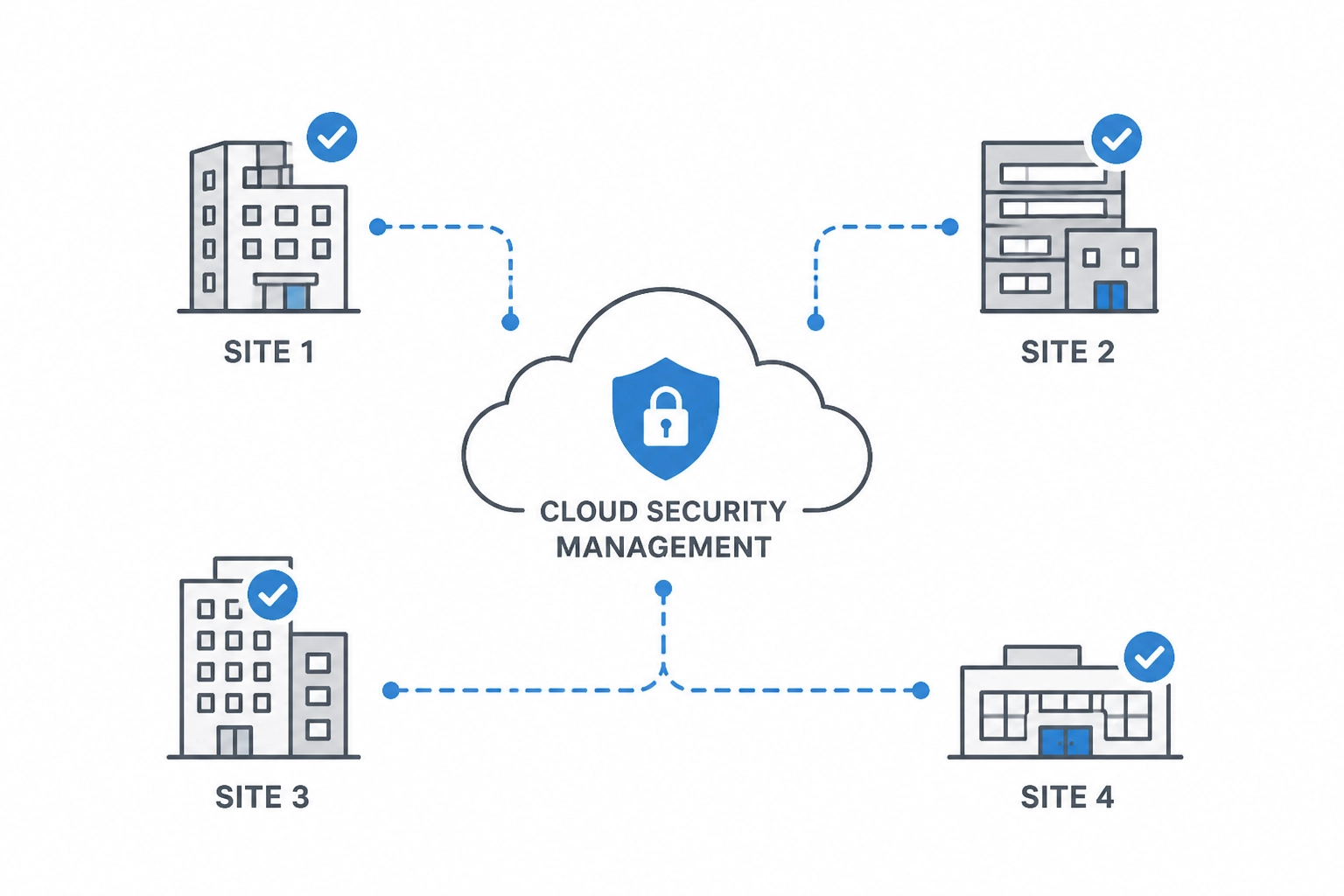
How to Audit Physical Access Across Multiple Locations

Who can enter your server room right now? If answering that takes three exports, two office managers, and a guess about whether an old badge still works, you have a reason to run a physical access audit.

The audit should answer a practical question: do current permissions still match current business need? At several locations, the answer can change quietly. A person transfers, a contractor gets extended, a project ends, and access that was once appropriate keeps working.

You don’t have to inspect every badge swipe to find the problem. Start with the people and credentials that are active, trace what they can open and when, then give each questionable permission an owner and a decision. Here is a way to do that without handing managers a 5,000-row spreadsheet.

Physical access audit dashboard showing permissions across multiple sites beside a door reader

What does a physical access audit actually review?

A physical access audit compares the people in your access control platform with a trusted employment or contractor source. It checks active credentials, access groups, doors, schedules, exceptions, and the administrators who can change those settings. It also tests whether a recorded permission matches what happens at the opening.

That last part matters. A clean cardholder list cannot tell you that a lobby is scheduled unlocked all weekend or that a warehouse door rarely latches. The permission review is the core of the audit, but a few targeted door and event checks show whether the system behaves the way the records imply.

Decide the scope before exporting data. Are you reviewing every site, a newly acquired region, or a set of sensitive openings? Which HR or identity system is the source of truth? Who will approve findings? A clear scope makes it possible to finish the review and show what changed.

How does a physical access audit find stale users?

Begin with the active identities in the access control system. Compare employee records with the current HR or enterprise identity roster. Compare contractors with their sponsor and approved end date. Investigate a former employee who remains active, a person with no current manager, a duplicate cardholder, or someone whose site no longer matches their job.

Don’t assume every mismatch is an error. A traveling employee may have a legitimate second location. A contractor may have a documented extension. The question is whether a current owner can explain the permission and show when it will be reviewed again. “Someone probably needs it” isn’t an approval.

If you use automated provisioning, this comparison is still useful. A connector can fail, an exception can bypass the normal flow, and old records can predate the integration. Our employee access lifecycle guide explains how routine changes should reach the system. The audit checks whether they actually did.

Why does a physical access audit check credentials separately?

One person can have several credentials: a physical card, a replacement card, a fob, and perhaps a mobile credential on a phone. Deactivating a user and revoking a credential are related actions, but your report should show both states. A lost badge that still works is a different finding from an active user with the wrong access group.

Look for two active cards where policy expects one, a replacement that left the old card valid, a mobile credential on a retired device, or a temporary credential with no end date. Check the platform’s actual status and test a sample at the door when the records are ambiguous.

This is also where a multi-site team benefits from a central view. You should be able to see the person’s credentials and site permissions together rather than calling each location to learn which badge they issued. If local systems can’t provide that view, document the limitation as part of the audit.

What should you look for in access groups?

A physical access audit should review group definitions before asking every manager to approve every cardholder. Most enterprise platforms grant door permissions through groups, levels, or roles. For each group, identify its purpose, doors, schedule, eligible population, membership approver, and owner. A group called “Warehouse Supervisors” should mean the same thing at the sites where it is used.

Names like “Special Access 3” are a warning. So are groups created for an old renovation, a former executive, or a department that no longer exists. Check whether they still have users, whether the doors still exist, and what might break if the group changes. Retire unused groups deliberately after confirming their dependencies.

Then compare each person’s current role and location with their memberships. Transfers often add access and fail to remove the old doors. A facilities employee who moves to Finance may still be in the maintenance group. The audit should find those inherited permissions and send them to the right owner for a decision.

How should cross-site and sensitive access be reviewed?

A physical access audit should make cross-site permissions visible. Central management makes it easy to give someone access across locations, but that convenience needs a rule. Does a regional manager need every site in their region? Does a traveling employee need permanent access to a second office? Should an IT technician enter every server room or request access for a specific visit? The answer depends on your operating model, but the current permissions should reflect an explicit answer.

Give sensitive openings a closer review. A server room, security office, cash room, lab, or high-value inventory area may need a named business owner, a narrower schedule, an expiration date, and a more frequent review. Ask who approved each person’s access and whether that reason still holds. Don’t assume a general employee access sign-off covers these doors.

Look at the schedule as well as the door. A warehouse supervisor may need the loading area during a shift, but 24-hour access could be broader than the job requires. Review holiday and weekend schedules too. A door that is scheduled unlocked ignores the badge permissions during that period, so include public and employee entrances in a targeted schedule check.

Who can change access, and does that authority still fit?

A physical access audit also needs a pass through administrator rights. A site administrator can grant permissions that a cardholder can only use. Review global and regional administrators, help desk roles, vendor support accounts, dormant accounts, and any shared logins. Confirm that each person still has the job and the right scope, and that the system logs changes.

Use individual accounts and multifactor authentication where the platform supports them. Limit vendor access to the support work it requires and review how it is enabled and removed. IT should also know how the access platform and any cloud connection reach the network. Alen’s approach avoids unnecessary open ports and firewall holes; a useful audit includes who owns that secure path and its support access.

Administrator review is not a separate cybersecurity exercise to leave for another year. If a former local manager can still create cards or change schedules, the door-permission report is only part of the picture.

How does a physical access audit handle contractors and exceptions?

Each contractor needs a sponsor who can say why the person still needs access. Confirm the company, approved site, schedule, access profile, start date, and end date. A long-running contractor with no sponsor or expiration is a data problem before it is an automation problem.

Look for temporary project access that became permanent after a move, renovation, inventory count, or special assignment. If the system can expire it automatically, use that ability. If it cannot, assign a review date to a person. An exception without an owner will be difficult to justify six months later.

Record the reason, approver, doors, schedule, and end or review date when granting unusual access. That small amount of discipline makes the next audit faster. It also helps the service team distinguish an intentional exception from a configuration mistake.

Should the audit include offboarding and door behavior?

Yes. A physical access audit should sample a few recent departures and trace the real sequence: when HR recorded the departure, when enterprise identity changed, when the team disabled the cardholder and each credential, and when the local controller received the update. If a site was offline, find out how the team handled the pending change. A policy that says “immediate removal” is only meaningful if the workflow can meet it.

Then review a sample of recurring forced-door, held-open, reader-offline, and controller-offline events. Repeated alarms may point to a closer, door hardware, a propped opening, or a bad configuration. The audit is not a full mechanical survey, but it should not declare an opening secure because the access list is tidy while the door never latches.

Video can help clarify a persistent alarm at a priority opening when the platforms are connected. Our access control and video guide covers that investigation workflow. In this audit, the question is whether the permission and the physical opening tell the same story.

What should a physical access audit ask managers to decide?

A manager needs a review they can act on, not a raw export. Give each reviewer only the people and groups they own, with the person’s current role, site, access group, sensitive doors, schedule, expiration, and last approval. Make the decision explicit:

  1. Keep: the access still fits the current job and has a clear owner.
  2. Remove: the person no longer needs it or the credential should be disabled.
  3. Modify: change the site, doors, schedule, or expiration.
  4. Investigate: the record is incomplete or conflicts with another source.

Security should define the physical access policy and approve restricted areas. A manager can confirm business need for their team. IT can resolve identity data and integration failures. Assign one owner to each finding and capture the date the change was verified. “Reviewed” should not mean that someone merely opened the file.

Keep evidence appropriate to company policy: scope, review date, reviewer, decisions, removed permissions, retained exceptions, and unresolved items. That shows what the organization did with the findings.

How often should you run a physical access audit?

Set a cadence based on risk and company policy. Administrator roles, sensitive doors, contractors, and temporary exceptions may need a shorter cycle than ordinary employee entrances. A new acquisition or major reorganization can also justify an extra review. The exact calendar is less important than a named owner and proof that decisions were completed.

Use the first audit to learn where the time goes. Different group names at every site slow the review. When HR and cardholder records do not match, fix the identifiers. Managers who repeatedly approve the same temporary access need a better approval or expiration rule. Our multi-site access control standardization guide covers the shared naming and operating rules that make the next review easier.

What happens after you find a problem?

A physical access audit should turn each finding into work with an owner and target date. Remove clearly unauthorized access promptly through the approved process. Ask a business owner to resolve uncertain permissions. Correct source data when the problem began in HR or identity. Redesign an oversized group when one permission keeps causing the same exceptions.

Look across sites for patterns. If ten offices retain access for former employees, the real issue may be the departure workflow. If an acquired region has entirely different group definitions, the organization needs a governance decision before mass changes. An audit earns its value when it fixes the cause as well as the individual record.

Close the loop by verifying the system change and, for a sample of high-risk doors, the actual behavior at the reader. Give the central team one documented service path for issues that span identity, network, controller, and door hardware. That is how the review becomes a repeatable process instead of an annual spreadsheet exercise.

Frequently asked questions

How do I find former employees who still have badge access?

Compare active cardholders and credentials with the current HR or enterprise identity roster. Investigate mismatches, then confirm both the person and every credential are disabled. Trace a sample of recent departures to test whether the normal process worked.

How often should badge access be reviewed?

Choose the cadence by risk and policy. Sensitive doors, administrators, contractors, and temporary access commonly need closer attention than standard employee entrances. Name a reviewer and track the decisions through verified changes.

Should managers approve physical access?

Managers can confirm a person’s business need. Security should own the door policy and restricted-area rules. A sensitive opening may have a separate business owner. Record who approved the exception and when it expires or returns for review.

Should temporary access expire automatically?

Use platform expiration when it supports the approved workflow. Otherwise give the permission a named owner and review date. Do not leave project access active simply because someone might need it again.

Does the audit include the actual doors?

The main review covers identities and permissions. Sample door schedules, recurring alarms, and physical behavior at priority openings as well. A correct access group does not compensate for an unlocked schedule or a door that fails to latch.

Get an answer you can trust

The next time someone asks who can enter the server room, your team should be able to answer with a current record, a reason, and an owner. Start with one sensitive area and one representative site. Prove the method, then extend it across the portfolio.

Alen Security can review your access groups, credentials, administration, and door behavior, then help your IT and Security teams turn the findings into a manageable plan. Schedule a physical access review conversation with Alen to see where to start.

person-using-access-control-on-their-phone

How to Automate Employee Access From Onboarding to Offboarding

It’s Monday morning. A new employee reaches the office, but their badge doesn’t open the door. HR completed the hire. IT created the account. The access request never reached the door system, so they’re waiting in the lobby. It’s a familiar problem for teams trying to automate employee access across sites.

Can you automate employee access so this stops happening? Yes, if your HR and identity data can feed a supported access control workflow. The routine changes can happen on time, while restricted doors and unusual requests still go to a person for approval. The goal is reliable access for the right person, at the right site, for the right length of time.

That matters when one IT and Security team supports many buildings. A manual process that feels manageable at one office can become a daily chase across locations. Here’s how to make the lifecycle predictable without giving an integration more authority than it should have.

Employee using a phone credential at an access control reader

What does it mean to automate employee access?

Automated physical access provisioning uses trusted employee data and approved rules to create, change, suspend, or remove a person’s access control record. A hire, location transfer, role change, leave, or departure can trigger a workflow instead of relying on someone to retype the same details into another system.

The source may be an HR platform, identity provider, directory, or contractor system. The access control platform must support the actual connector or API, and the organization must define what the data is allowed to change. A working connection by itself does not prove that the right doors will open or close.

Think of it as a handoff between teams. HR owns employment facts. IT manages enterprise identity and the integration. Security defines door access policy and approves exceptions. The exact split varies, but everyone needs to know which system is authoritative for each field.

Where should the access rules begin?

Start with the access most people in a specific role and location need. An employee at a regional office might receive the employee entrance and standard office areas during approved hours. That baseline can be assigned automatically when the required HR record is complete.

A server room, security office, lab, or high-value storage area is different. Those doors need a specific business reason and an owner who can approve it. A job title alone should not grant sensitive access. Set an end date and review date for exceptions, so a temporary assignment does not quietly become permanent.

The source data must be good enough to drive the rule. Decide which fields are required, such as employee ID, status, start date, worker type, manager, role, and primary location. If a location is missing or a record conflicts with an existing cardholder, stop the automated grant and send it for review. Don’t let the system guess.

How do you automate employee access for onboarding?

For a normal hire, HR creates the employee record and confirms the start date. The identity workflow creates or matches the person in the access platform. An approved baseline profile is applied for the correct site and schedule, and the credential is issued. Restricted access follows its separate approval path.

The timing matters. An employee should not be locked out at 8 a.m. because a nightly job has not run, and a future hire should not have working access a week early. Test when the record is created, when the credential is ready, and when the door actually accepts it.

Give the employee a clear path to get help if something fails. A centrally managed platform can make it easier for the support team to see the person’s record and the site from one place. It still needs a named service owner who can resolve a bad field, credential problem, or door issue without sending the employee between HR, IT, and Security.

What should happen when someone changes roles or locations?

To automate employee access during a transfer, remove the doors that no longer fit and add what the new role requires. Adding the new doors is the easy part. The old ones are where risk builds up. Someone who moves from the warehouse to the regional office should not keep warehouse access simply because nobody asked to take it away.

Ask when the change takes effect and whether a short transition period is approved. Review special permissions one by one. A server room exception tied to the old job may need to end, while an approved cross-site assignment may need a new expiration date.

For a site move, the workflow may update entrances, parking, schedules, local administrator visibility, and the credential. It should avoid duplicate identities for the same person. Central management makes this simpler, but only if the data clearly identifies the old and new locations and the team verifies that both sides of the move occurred.

How do you automate employee access removal at offboarding?

For a planned departure, HR can set the approved end date and time. The workflow deactivates the cardholder and mobile credential, removes access groups and exceptions, and records the result. Recovering a physical card is a separate task; the card should stop working even if it is never returned.

An immediate termination needs a faster path than a routine sync. HR and Security should agree on who can trigger urgent deactivation, who checks completion, and who handles a failed update. Define the timing in the identity system, access platform, and local controllers. A successful “sent” status is not the same as confirmation that a door will reject the credential.

What if a location is offline? A central change may wait until the controller reconnects, depending on the platform and configuration. Know that behavior before an urgent event. Maintain a local escalation procedure for a high-risk situation, and test how the system reports pending updates and catches up afterward. Our cloud access control outage guide covers that controller question in more depth.

What about contractors and employees on leave?

Contractors need a sponsor, approved site, schedule, start date, and end date. Their access should expire unless a responsible person renews it. A reminder before expiration helps avoid a last-minute scramble for a legitimate extension, but an unowned contractor record should not remain active indefinitely.

Leave is a policy decision, not a universal automation rule. HR and Security may suspend some access during extended leave and retain other access, depending on the situation. Decide how reactivation works too. A returning employee should be restored through the approved process instead of creating a second identity that no one recognizes.

These cases show why “automate everything” is a poor requirement. Automate the known baseline and expiry rules. Send ambiguous changes to the right owner with enough context to make a decision.

Do mobile credentials change the workflow?

When you automate employee access, mobile credentials change how a credential is delivered and supported, but they do not change the underlying policy. Some employees may enroll a phone before their first day. Others need a physical card because phones are restricted at the site, their device is not eligible, or the organization does not require use of a personal phone.

Plan for lost phones, replacements, transfers, and offboarding. Check what the selected platform supports for enrollment, revocation, device limits, readers, and fallback credentials. A mixed card and mobile environment is normal. The lifecycle should support both without leaving old credentials active.

Who approves restricted access, and who catches failures?

Automation should make approvals easier to trace. For each sensitive area, record the requester, approver, reason, start and end dates, and review owner. That gives an auditor a reason for the access and gives the team a clear way to remove it later.

When you automate employee access, assume a connector will eventually fail. A missing HR field, expired API token, renamed group, duplicate user, network interruption, or platform update can stop a change. Decide who gets the alert, when a retry is safe, when a person takes over, and how long a failed removal can remain unresolved.

Periodically compare active HR employees, enterprise identities, access cardholders, credentials, and contractor end dates. Look for a departed employee still active, an unexpected site profile, or a record without an owner. Reconciliation catches quiet drift that a green integration dashboard may miss. Keep the integration’s network path documented and secure, without unnecessary open ports or firewall holes.

How do you test automated employee access before rollout?

Run real scenarios with HR, IT, Security, and the person who answers access problems. Test at more than one type of location. These four checks cover the core journey:

  1. Create a future hire, issue the approved credential, and confirm the correct doors and activation time.
  2. Move a person between roles or sites, then verify that old access ends as new access begins.
  3. Expire a contractor and perform both a planned and urgent departure, including credential revocation.
  4. Break the connection or take a site offline, confirm that the failure is visible, and test recovery.

For each scenario, record the trigger time, approval, access group, schedule, credential result, controller status, alert, and person responsible for a fix. Run the old and new processes together long enough to find mismatches before the integration becomes the normal path.

Use the same naming and acceptance rules across locations. Our multi-site access control standardization guide covers the wider operating model. This lifecycle workflow should fit it, so each new site does not create a different version of onboarding and offboarding.

Frequently asked questions

Can employee badges be disabled automatically when someone leaves?

Yes, when the identity and access control platforms support the workflow. Define the trigger, timing, alerting, and verification. For urgent departures, include a manual escalation path and check how an offline controller handles a pending change.

Should a department automatically determine every door?

No. Department and location can help assign a standard baseline. Sensitive areas need separate approval rules based on a current business need. Review those exceptions when a person’s role changes.

Can contractor access expire automatically?

Yes, if the record has a reliable end date and the access platform supports expiration. Name a sponsor and renewal owner. Notify them before the date when extensions are common, while keeping the default expiry in place.

What happens if an HR or identity integration fails?

The team should receive an alert, retry where appropriate, and move unresolved records to a manual queue. Reconcile HR, identity, and access records so a failed grant or removal does not stay invisible.

Can mobile credentials follow the same lifecycle?

Often, if the selected platform supports provisioning and revocation. Device enrollment, replacement, eligibility, and physical-card fallback still need clear procedures. Test the actual phone and reader combinations used at your sites.

Make the next access change routine

That new employee at the door should be an exception, not the start of a three-team email chain. Build the workflow around reliable source data, a modest baseline, human approval for sensitive access, and visible failures. Then test a hire, a transfer, and a departure at real sites.

Alen Security can help your IT and Security teams map those changes to your access control platform, test the door-level results, and support the process as your locations grow. Schedule a conversation with Alen about the lifecycle your team needs to manage.

technician-fixing-camera

Should Access Control and Video Surveillance Work Together?

Access control and video surveillance answer different parts of the same incident. A badge is used at 7:42 p.m. The access system says the door opened. If that happened after hours at a site you manage from another state, what do you check next? Video can show who approached, whether someone followed them in, and whether the door closed behind them.

So, should access control and video surveillance work together? Yes, when the connection helps your team answer a real question or respond to an event. You do not need to combine every camera and every door. Start with the openings and incidents where matching an access event to the right video would save time or change your response.

For an IT Director supporting several locations, the result should be simple: an authorized person can find the door event, open the relevant camera view, and understand what happened without calling three people or guessing which camera is “CAM-47.” Here is how to decide where that workflow is worth building.

Technician adjusting a security camera

What does access control and video surveillance integration actually do?

At its simplest, the integration associates a door event with the camera that covers that opening. A user can move from a granted badge, denied credential, forced door, or held-open alarm to video from the same place and time. Depending on the platforms, the video may appear in one interface or open through a supported link to another system.

The integration may also help an authorized operator view an entrance before releasing a door remotely. That is a different workflow with a different permission requirement. Ask for a demonstration using your actual door names and camera views. A screenshot of a generic dashboard will not tell you how quickly your team can investigate Site 27.

Some products combine access and video in a common platform. Others connect separate platforms through a supported integration. Either approach can work. The test is whether the person handling an incident can get from the alert to useful evidence, and whether someone can support that connection after a software update.

Why does access control and video surveillance work better together?

An access event is a record of what the system detected. It can tell you a credential was accepted, a door stayed open, or a contact reported an unexpected opening. It usually cannot tell you on its own whether the cardholder brought in a coworker, a delivery kept the door open, or a closer failed to latch.

Video provides context around the event. If the clip opens at the right door and time, your team can decide whether to escalate, dispatch service, or close a harmless incident. That matters even more when a central security team supports many sites and cannot walk down the hall to look.

Access control and video surveillance together can make your response more consistent. One regional manager should not be hunting through cameras while another has an event-linked view. When door names, camera associations, and permissions follow a shared standard, the next location is easier to support.

Which incidents benefit most from access and video together?

A denied credential after hours

A denial could be a person at the wrong door, an expired badge, a contractor outside approved hours, or a former employee attempting entry. The event tells you what the controller decided. The video shows what was happening at the opening. You still check the credential record and access policy, but you can start with a clearer picture.

Imagine a warehouse manager calls because a vendor says their badge failed. The central operator opens the associated camera view and sees the vendor at the employee entrance instead of the contractor entrance. That is a different response from a denied credential presented repeatedly at a restricted room after closing.

A forced or held-open door

A forced-door alert means the door opened without the expected authorized sequence. A held-open alert means it remained open past the configured threshold. Neither alert tells you why. Video may show a delivery, equipment traffic, maintenance work, a propped door, or an actual unauthorized entry.

It may also show a mechanical problem. If the same door fails to latch every afternoon, the fix could be door hardware or a closer adjustment. An integration cannot repair the opening, but it can help your service team stop treating each alarm as an isolated mystery.

Alen’s 2026 domestic food manufacturer case study describes doors and overhead bays left open across two facilities. The upgraded environment combined access control, video, burglar alarm, and door-prop alerts. The practical point is the response: the team needs enough context to tell an operational habit from a security event.

Remote entry at a lightly staffed site

A remote office may not have a receptionist at every entrance. An authorized operator might use an intercom or door station and a camera view to check a visitor before releasing the door. That workflow needs the right live view, a reliable communication path, and a clear rule about who may unlock it.

Remote release is an administrative function. It does not replace required egress, emergency release, or fire-alarm behavior. The door hardware and local requirements still determine the safe design. The video view helps the operator make a decision; it cannot make a noncompliant opening safe.

Do access control and video need the same manufacturer?

No. Separate systems can often be connected when the vendors support the relevant APIs, drivers, versions, and licenses. A common platform may offer a smoother operator experience. A mixed environment may let you keep working cameras or choose equipment that fits a particular site.

Ask what the operator can actually do in each option. Can they open recorded footage from the access event? Is the camera view live, recorded, or both? Can they search by door and event type? What happens when a camera is replaced? Who fixes the connection if an upgrade breaks it? Those answers are more useful than a “unified” label.

A phased approach may be sensible for a company with existing equipment across many buildings. Connect priority doors first, document the mappings, and expand as sites are renovated. The central team can still use one investigation process even when hardware varies by location.

Where should you start the design?

Start with a real incident, not a product diagram. Pick a door your team struggles to investigate today. Ask what the operator needs to know in the first minute and what action they should be allowed to take. That defines the camera view, event association, permissions, and retention you actually need.

For a denied badge, perhaps the operator needs a 30-second clip before and after the event. For a loading dock left open, a broader view and a longer window may matter. For remote release, live video and two-way communication could be essential. The workflow dictates the configuration.

Then name each door and camera consistently. “Rear Employee Entry” in the access system should map to a camera name a human can recognize. Keep the camera’s field of view in the site record. A technically connected camera that points past the opening will not help an investigation.

What makes access control and video surveillance dependable across sites?

Time, mapping, and retention

The event and video need to agree on time. Check the time source, time zone, and daylight-saving behavior for controllers, cameras, servers, and cloud services. A clock mismatch can send an investigator to the wrong clip even when the integration appears healthy.

Record the door, reader, camera, view, site, and integration status together. Decide who updates that record when someone moves a camera or renames a door. Set video retention for the investigation period the organization actually needs, with access to exports limited to the right roles.

Permissions and network security

The person who issues badges does not automatically need recorded video from every site. A video investigator does not automatically need remote unlock rights. Set roles around jobs: viewing live video, searching recordings, exporting evidence, managing credentials, changing schedules, and releasing doors.

The connector itself needs scrutiny. IT should review service accounts, API tokens, encryption, logging, updates, and vendor support access. Give it only the permissions it needs. Alen’s approach to network-connected security systems is to avoid unnecessary open ports and firewall holes; the integration should have a documented, secure path rather than an exception nobody owns.

Licensing and support

A promised workflow may require separate access, video, integration, camera, or API licenses. Ask for the complete subscription and support scope before approving the design. If two vendors are involved, decide who takes the first call when an event no longer opens video.

That ownership matters after installation. A client should have one clear path to service, with a partner who can diagnose the door, camera, network, and connector together. Otherwise the integration becomes another place for tickets to bounce between teams.

What happens when one system is offline?

A video outage should not silently change the access-controlled door’s required local behavior. The door should keep operating according to its own design, while the team knows that video evidence is unavailable. The opposite can happen too: cameras may record while access events stop reaching the shared view.

Test the loss of a camera, the integration service, and connectivity at one site. Does the operator see a clear failure alert? Do event links recover after the connection returns? Are recordings still available in the video system? A broken association that no one notices is worse than a visible outage with a known response.

For a deeper look at controller behavior during a WAN outage, see our cloud access control offline guide. This article’s narrower question is whether the link between a door event and its video survives or clearly reports a failure.

How do you test the workflow before rollout?

Commissioning should prove what an operator can do, not merely show that two systems exchanged a message. Use representative doors from different site types and have the person who will handle incidents run the test.

  1. Present a valid and a denied test credential, then open the matching video and confirm the correct door and time.
  2. Trigger a controlled forced-door and held-open condition, and check the alert, camera mapping, and recorded clip.
  3. Use a limited operator account to confirm viewing, export, and remote-release permissions match the role.
  4. Disconnect a camera or integration service, verify the failure is visible, then restore it and test recovery.

Write down the result, platform versions, licensing, camera view, timestamp difference, and the person responsible for any fix. A single passing demonstration does not prove that every site has the right mapping. Make the test repeatable so a new location can be accepted against the same standard.

Our multi-site access control guide covers the broader rules for naming, site records, permissions, and support. This integration should fit that operating model rather than becoming a separate project at each building.

Frequently asked questions

Can a door alarm automatically open a camera view?

Many supported integrations can associate an alarm with a mapped camera, but the exact display depends on the platforms, versions, licenses, and configuration. Test the forced-door and held-open events you care about with the operator account that will use the feature.

Can video prove who used a badge?

It can show visual context around the event. It does not automatically prove identity. Camera angle, lighting, timestamp accuracy, and the possibility that someone followed the cardholder all matter. Treat the clip as evidence to review alongside the access record, not as a substitute for investigation.

Can an operator unlock a door from the video system?

Some platforms support remote release through a configured integration. Limit that action to authorized roles, verify the communication path, and document the operating procedure. The door’s required egress and emergency behavior must be designed independently of a remote command.

Is integration useful at a small location?

It can be, especially if a central team investigates incidents for that location. The value depends on how often events occur and whether the linked view reduces work. Start with a high-value door and test the workflow before connecting every opening.

What if we already have different camera systems across sites?

Inventory the platforms, versions, and supported connectors. You may be able to integrate some sites now and migrate others during planned upgrades. Keep door and camera naming, incident steps, permissions, and documentation consistent so the central team has a predictable process.

Make the next investigation easier

The best reason to connect access control and video surveillance is a real incident your team can resolve faster. Pick the door, the event, and the operator. If the operator can get to the right video and take the right action without hunting, the integration is doing its job.

Alen Security can review your existing access control and video systems, map the door-to-camera workflows that matter, and build a phased plan for your locations. Schedule a conversation with Alen to see which doors should be connected first.

What Happens to Cloud Access Control When the Internet Goes Down?

If the internet goes down, do your doors stop working? Cloud access control offline behavior depends on the equipment, configuration, power, and type of outage. In many systems, existing credentials and door rules continue at a local controller or intelligent lock. Live cloud functions may pause until the connection returns.

For an IT Director supporting multiple sites, “it works offline” is too vague. Ask which decisions remain local, which changes need a connection, how long events are stored, and what happens when connectivity returns. Test those answers at a real door before accepting the deployment.

Person holding a phone with a mobile credential beside an electronic door lock

How does cloud access control work offline?

In a common design, the cloud platform manages users and policies while a controller at the site makes door decisions using its last received configuration. A known credential can still be checked locally during a temporary WAN outage. Some wireless locks have different synchronization and offline behavior, so the architecture matters.

That does not promise every door will work indefinitely. The controller needs power, a functioning connection to the reader and lock, and locally available policy. A platform outage, a site network failure, and a power failure are different events. Ask your integrator to show the behavior for each one.

What keeps working when the connection is lost?

The answer varies by product and setup. A site controller may continue to handle:

  • Previously synchronized credentials
  • Stored access levels and door schedules
  • Local lock and unlock rules
  • Door position and request-to-exit inputs
  • Local alarms and access event storage

“Previously synchronized” is the key qualification. If a credential and its permissions reached the controller before the outage, the last known rules may continue to apply. If the controller never received a new credential, it cannot make a decision from a change it does not know about. Confirm the controller’s database and storage limits for the specific site.

What stops or gets delayed during an internet outage?

Tasks that need live communication with the cloud may be unavailable or delayed. These can include a new badge or mobile credential reaching the site, a schedule or access-level change, a remote unlock command, current event visibility in the cloud dashboard, and integrations that send updates from HR or an identity provider.

The administrator may still be able to make a change in the central application. That does not mean an offline controller has received it. The interface and the door can temporarily show different states. Your operating procedure should say who checks that the change actually reached the site after recovery.

A new hire arrives during the outage

Suppose the site loses its WAN connection at 8:00 a.m. HR creates a new employee at 9:00 a.m. and an administrator issues access in the cloud. If the local controller cannot receive that update, the employee’s credential may not open the door until service returns. Plan an approved, supervised way to admit that person when the business cannot wait. The answer should never depend on an improvised shared code.

An employee is terminated while the site is offline

This is the more sensitive case. A credential that was valid locally before the outage may remain valid under the last synchronized rules even after someone revokes it in the cloud. The timing and any local override depend on the system. Ask: “If we terminate a user while this site is offline, when and how does that credential stop working at the door?”

For a higher-risk opening, define an immediate local escalation, an authorized on-site response, or redundant connectivity. Include verification after the controller reconnects. Do not treat a cloud-side confirmation as proof that every offline site has applied a revocation.

Are access events lost when cloud access control is offline?

Many controllers store events locally and forward them when connectivity returns. The storage limit and recovery behavior are product-specific. A quiet office and a busy distribution center may consume capacity at very different rates.

Ask how many events the controller can hold, what happens when storage fills, whether timestamps remain accurate, which event types are retained, and whether the cloud presents them in the right order after reconnection. If access events are tied to video, test how that association behaves during and after the outage. “Events are cached” is a starting claim, not a complete specification.

Do schedules and remote unlock commands still work?

A schedule already stored on the controller may keep running. A change made after the connection is lost may not arrive. Test normal hours, holiday rules, temporary unlock periods, controller timekeeping, and an extended outage. A site closure or special event can expose a gap in a plan that only tests the usual workday.

A command sent from a cloud dashboard generally needs a path to the site. If that path is down, remote lock or unlock may not reach the door. Local door operation and required egress are separate design questions. The locking arrangement, power-loss response, emergency release, and fire-alarm interaction must be reviewed for the opening and applicable local requirements. Remote administration is never a substitute for a compliant life-safety design.

What if the internet and power both go down?

Internet redundancy does not power a controller. Ask which controllers, readers, locks, network devices, and cellular equipment are on backup power, how long the backup is expected to last, and how batteries are tested and replaced. Confirm the actual lock behavior after power is exhausted and the required egress arrangement. A fail-safe or fail-secure label alone does not describe the whole door.

A useful acceptance test separates three conditions: loss of the WAN path, loss of the site’s network equipment, and loss of normal power. Each can affect different components. Document the result at representative doors, including a restart after power returns.

When does cellular or a second internet connection make sense?

A second path can reduce the time a site is disconnected from cloud management. Options include dual ISPs, wired service with cellular failover, or a dedicated cellular connection. The right choice depends on outage frequency, the need for live administration, termination risk, event visibility, carrier coverage, and the cost of downtime.

In Alen Security’s national retail deployment, a Brivo cellular module is part of the access control architecture, reducing dependence on the retailer’s store or corporate LAN. That is one design choice, not a universal prescription. Cellular still depends on coverage, equipment, power, provider service, and account management.

For a multi-site business, classify locations by operational need. A small office may tolerate delayed administration. A 24-hour distribution center or sensitive facility may need a second path and a more explicit local response. Let IT decide whether access control uses enterprise network redundancy or a dedicated connection.

How should IT test cloud access control offline?

Run a controlled outage during commissioning. Capture the platform’s stated behavior first, then test it at representative doors. Coordinate the test with Security, Facilities, the integrator, and anyone responsible for safe operation.

  1. Confirm the starting configuration, then disconnect the WAN path while keeping local equipment powered.
  2. Test an existing authorized credential, a denied credential, schedules, and local event capture.
  3. Try a remote command and test user change; record what reaches the door.
  4. Restore service and confirm event upload, queued changes, time accuracy, and health. Repeat the relevant checks on backup power or a second connection.

Record the controller model, firmware, credential type, test time, outage duration, observed door behavior, event counts, and any manual steps. A passing test at one door does not automatically prove every lock type and site configuration behaves the same way.

How long can cloud access control offline operation last?

There is no universal number. Known credentials may continue to work while administration becomes increasingly constrained. The practical limit depends on local database and event capacity, stored schedules, controller timekeeping, power and battery runtime, and the changes the business needs to make during the outage.

Ask two separate questions: “How long can the door make the expected local decisions?” and “How long can our team operate the site acceptably without central changes or live visibility?” A vendor answer to the first does not settle the second.

What should every site document before an outage?

Write a short response plan by site class. It should cover what continues, what pauses, who owns the incident, and how to verify recovery. These examples are prompts to fill with tested, platform-specific answers:

  • Existing credentials: expected local decisions and site status monitoring.
  • New hires and terminations: temporary admission, urgent revocation, and local escalation.
  • Remote commands and events: authorized on-site alternative, local storage limit, and reconciliation.
  • Power loss: battery runtime, door behavior, and life-safety response.

Identify who contacts the ISP or carrier, who supports the controller, who can authorize a local procedure, and who closes the incident after event and configuration synchronization. For multiple locations, a single escalation path and consistent site records make the response easier to repeat. Our multi-site access control standardization guide explains how to set those portfolio-wide rules.

Frequently asked questions

Will employees be locked out if cloud access control loses internet?

Not necessarily. Many systems make decisions for previously synchronized credentials locally. Verify the selected controller, lock, and configuration with an outage test.

Can I issue or revoke a badge while a site is offline?

You may be able to change the user in the cloud platform, but the offline site may not receive the update until connectivity returns. Test the propagation and define a local procedure for urgent changes.

Does cellular backup eliminate outages?

No. It supplies another communication path, but carrier service, signal, equipment, power, and the cloud platform can still fail. Confirm failover and recovery in a controlled test.

Will a cloud platform unlock doors when the power fails?

The door’s behavior depends on its hardware, power and backup design, and required egress arrangement. Internet loss and power loss must be evaluated separately.

Know the offline story before you deploy

Cloud access control offline operation can keep known users moving through doors while central administration waits for a connection. The useful question is exactly which functions continue at each site, for how long, and what your team does when an urgent change cannot reach a door.

Alen Security can help your IT and Security teams review controller behavior, test an outage, and set the right connectivity and response plan for each location. Talk with Alen Security about offline operation at your sites.

Cloud Access Control: How to Choose for Multiple Sites

For a multisite company, choosing cloud access control, an on-premises system, or a hybrid approach is not a feature contest. It is an operating-model decision.

For multi-site access control, cloud, on-premises, and hybrid architectures can all work. The right choice depends on how your organization wants to manage users and infrastructure, handle outages, protect the network, connect systems, add locations, and support the platform.

The architecture affects who maintains servers, how locations connect, what happens during an internet outage, how administrators manage users, how identity systems integrate, how upgrades are handled, and how quickly new locations can be added.

That is why the right question is not, “Which architecture is best?”

The better question is: Which architecture fits the way our company needs to operate, secure, support, and expand access control?

What is cloud-managed access control?

Cloud-managed access control uses a hosted management platform rather than relying entirely on a server that the customer operates at a local site or corporate data center.

The physical layer still exists.

Doors still need readers, controllers or intelligent locks, power, door hardware, credential communication, and local decision-making appropriate to the selected platform. “Cloud” describes where management services and software functions live, not the disappearance of field hardware.

In a multisite environment, cloud management can make it easier for authorized administrators to manage many locations through one environment without deploying a traditional application server at every site.

Potential advantages can include:

  • Central administration across locations
  • Reduced local server maintenance
  • Remote software management
  • Easier deployment to smaller sites
  • Central event visibility
  • Faster credential changes across locations
  • Easier access for authorized remote administrators

The exact capabilities depend on the platform.

What is on-premises access control?

On-premises access control keeps the primary management software and database within infrastructure operated by the organization or its designated hosting environment.

That can give IT direct control over:

  • Server architecture
  • Database location
  • Backup process
  • Upgrade schedule
  • Network routing
  • Internal integrations
  • Change management

It also means the organization owns more of the operational work.

Servers need to be maintained. Operating systems need support. Databases need backup and recovery procedures. Software upgrades require planning. Remote access has to be designed securely. Redundancy has to be built and tested.

For some organizations, that control is worth the work.

For others, it is exactly the burden they are trying to remove.

What is hybrid access control?

Hybrid access control combines cloud and on-premises elements.

That can take several forms.

A company may keep certain sites or field hardware on existing infrastructure while moving management functions to the cloud. It may connect on-premises sites with cloud-managed locations during a phased migration. It may keep a specific integration or data function on-site while using hosted management elsewhere.

Access control architecture does not have to be an all-or-nothing decision. Depending on operational, cybersecurity, infrastructure, integration, and resiliency requirements, an organization may choose cloud-managed, on-premises, or hybrid approaches across its environment.

For a company with existing investments, hybrid can create a migration path rather than forcing a single cutover date.

How should a multisite organization choose between cloud, on-premises, and hybrid access control?

Start with operating requirements.

The architecture should answer questions in seven areas:

  • Administration
  • IT ownership
  • Connectivity and offline behavior
  • Cybersecurity
  • Integrations
  • Rollout and growth
  • Support and lifecycle

Let’s take them one at a time.

1. How do you want access control to be administered?

A company with 40 locations needs to decide where administration lives.

Questions include:

  • Can corporate Security manage every site?
  • Can regional managers manage only their region?
  • Can a local manager issue temporary credentials?
  • Who can unlock a door remotely?
  • Who can change schedules?
  • Who can view access events?
  • Who can create or deactivate administrators?

Cloud-managed systems often make centralized remote administration easier to deploy, especially when sites do not have local servers.

On-premises systems can also support centralized administration, but the organization is responsible for the infrastructure required to make that administration available and secure.

The important issue is not where the server lives.

It is whether the administrative model matches the company.

2. How much access control infrastructure does IT want to own?

Some IT departments want physical access control to fit their existing server, backup, monitoring, and change-management environment.

Others want fewer application servers to maintain.

That distinction matters.

An on-premises deployment may require IT involvement in:

  • Server provisioning
  • Operating system maintenance
  • Database backup
  • Storage
  • Redundancy
  • Patch planning
  • Remote access
  • Monitoring
  • Disaster recovery

A cloud-managed deployment can reduce some of that local application-server work, but it does not create “zero IT involvement.”

IT should still review identity, network requirements, vendor access, administrator controls, integrations, logging, incident response, and procurement requirements.

That is a better expectation than promising that cloud removes IT from the picture entirely.

3. What happens when internet connectivity is lost?

This should be answered before deployment, not during an outage.

A properly designed cloud-managed system can continue making local door decisions when internet connectivity is unavailable, but the exact behavior is platform-specific.

In many cloud-managed designs, local controllers retain the information needed for approved door decisions while offline. When connectivity returns, stored events and updated configuration can synchronize according to the selected platform’s documented behavior.

That does not mean every cloud platform behaves the same way.

Ask each vendor or integrator:

  • Which credentials continue to work offline?
  • Do schedules remain active?
  • Are access events stored locally?
  • How much local event storage exists?
  • What happens to a newly issued credential during an outage?
  • What happens to a newly terminated credential during an outage?
  • What happens after the controller loses power and restarts?
  • Can a local administrator make changes without WAN connectivity?
  • Is cellular backup supported or required?

A 10-minute internet outage should not be the first time the company learns the answers.

4. Is cloud access control more secure than on-premises access control?

Not automatically.

Security depends on architecture, configuration, identity controls, software lifecycle, vendor practices, network design, and how the organization operates the system.

Cloud can reduce certain risks, such as an aging locally managed server that no longer receives timely maintenance. On-premises can give an organization direct control over infrastructure and data paths. Either can be poorly configured.

NIST’s Zero Trust Architecture guidance is useful because it rejects the idea that network location alone creates trust. A device does not become trustworthy simply because it sits on the corporate LAN, and a cloud service does not become trustworthy simply because it is hosted elsewhere.

For any architecture, evaluate:

  • Administrator authentication
  • Multifactor authentication
  • Role-based permissions
  • Encryption
  • Logging
  • Vendor support access
  • API security
  • Firmware and software updates
  • Vulnerability response
  • Device hardening
  • Network requirements
  • Data retention
  • Backup and recovery

If a cloud platform uses outbound encrypted connections and reduces the need for inbound firewall rules, that can simplify local network design. It does not eliminate cyber review.

5. What integrations does the company need?

Access control rarely lives alone in an enterprise environment.

The architecture may need to connect with:

  • Enterprise identity platform
  • Enterprise directory
  • Identity provider
  • HR systems
  • Visitor management
  • Video surveillance
  • Intercoms
  • Intrusion detection
  • Elevator control
  • Building systems
  • Mobile credential services

Integration requirements can materially affect the architecture decision.

An on-premises system may have a long-standing integration the company cannot replace immediately. A cloud platform may offer modern APIs or built-in identity workflows the company wants. A hybrid approach may preserve one integration while the rest of the environment migrates.

Do not assume an integration exists because both products use common enterprise terms.

Verify the exact platforms, versions, licensing, data flow, authentication method, and operational workflow.

6. How quickly does the organization need to add or change locations?

A company opening ten small offices per year has a different problem than a company operating two large campuses.

Cloud-managed access control can be attractive in distributed environments because the company may not need to deploy a traditional management server at every location.

That can make small-site rollout easier.

But site deployment still requires the physical work:

  • Door survey
  • Locking hardware
  • Readers
  • Controllers or intelligent locks
  • Power
  • Cabling or wireless design
  • Network or cellular connectivity
  • Commissioning
  • Credential setup
  • Life-safety coordination

Cloud changes the management architecture.

It does not turn doors into software.

7. How does the company want to handle upgrades and lifecycle?

On-premises systems usually place more upgrade planning on the organization or its integrator.

Cloud platforms often move more software maintenance to the provider.

That can reduce local administration, but the company should still ask:

  • How are updates tested?
  • Can changes affect integrations?
  • How are administrators notified?
  • What is the device firmware policy?
  • What happens when a controller reaches end of support?
  • How are vulnerabilities communicated?
  • What service-level commitments exist?

The lifecycle question is especially important for a multisite environment because one outdated component can turn into dozens of outdated components if the standard is repeated long enough.

When does cloud-managed access control make sense?

Cloud is often worth serious consideration when the organization wants:

Centralized administration across many sites Less local server infrastructure Remote access for authorized administrators Faster deployment to smaller locations Central software management A platform that can grow location by location

A national architecture, engineering, and construction firm selected Alen Security to manage a phased Brivo cloud access control rollout across its office portfolio. As documented in Alen’s 2026 case study, 50 of approximately 140 locations had been completed at the time of publication.

The reason that example matters is not that cloud is always the answer.

It shows where cloud management fits well: many locations, centralized administration, construction-driven deployment, and a desire to reduce local infrastructure management.

When does on-premises access control make sense?

On-premises may fit when the organization:

  • Requires direct control over hosting infrastructure
  • Has specific internal hosting or data requirements
  • Relies on integrations built around an existing local environment
  • Has the staff and process to maintain the system
  • Needs architecture that is difficult to reproduce in a hosted model
  • Has contractual or operational reasons to keep management services inside its environment

The question is whether the organization wants to own that responsibility for the life of the system.

When does hybrid access control make sense?

Hybrid can be useful when:

  • A multisite company is migrating gradually.
  • Some locations have reusable infrastructure.
  • One business unit has requirements that differ from the rest.
  • The company is acquiring businesses with existing systems.
  • Certain integrations need to remain on-premises temporarily.
  • The organization wants cloud management without replacing every field component immediately.

Hybrid should be designed intentionally.

Otherwise, it can become a polite name for a fragmented environment.

A practical decision table

QuestionCloud-Managed May FitOn-Premises May FitHybrid May Fit
Many distributed sitesOftenPossible with central infrastructureOften
Reduce local application serversYesNoPartially
Direct control over server environmentLessYesMixed
Phased legacy migrationYes, platform dependentYesOften strong
Local integrations that cannot movePlatform dependentOftenOften
Central remote administrationOftenPossibleOften
Offline door operationPlatform dependentPlatform dependentPlatform dependent

Notice the last row.

Offline behavior is not a cloud-versus-on-premises slogan. It is a controller and system-design question.

Frequently asked questions about cloud, on-premises, and hybrid access control

Does cloud access control stop working if the internet goes down?

Not necessarily. Many cloud-managed systems make access decisions locally and can continue operating with the last synchronized configuration. The exact credential, event storage, schedule, and synchronization behavior must be verified for the selected platform.

Does cloud access control eliminate local controllers?

No. Cloud management does not eliminate the field hardware that interfaces with readers, locks, sensors, and doors. The exact hardware architecture varies by product.

Is hybrid access control temporary?

It can be temporary during migration, or it can be a deliberate long-term architecture. The organization should document why the hybrid model exists and how it will be supported.

Is cloud access control always easier for IT?

It can reduce local server administration, but IT still has work around identity, networking, cybersecurity, vendor risk, integrations, logging, and governance.

Can an on-premises access control system manage multiple locations?

Yes. Multisite management is not exclusive to cloud platforms. The organization must provide and support the infrastructure that connects and hosts the environment.

Choose the architecture around the business, not the trend

The right access control architecture is the one your company can secure, support, and operate well.

Alen Security works with different access control architectures and manufacturers based on the customer’s environment. If you are evaluating cloud, on-premises, or hybrid access control across multiple locations, we can help document your requirements and map them to a system design before product decisions lock you into the wrong operating model.

Talk with Alen Security about your access control architecture.

For related guidance, read our guide to replacing shared door codes across multiple locations.

Access Control Migration: How to Avoid Multi-Site Mistakes

Planning a legacy access control migration across multiple locations means coordinating people, systems, and site schedules while keeping doors operating. A clear plan helps IT, security, and facilities teams assess existing conditions, test the approach, and roll out a consistent access control standard.

At first, an access control site migration may seem straightforward. By the fiftieth location, the quality of the plan becomes obvious. A multi-site migration magnifies every decision. Across locations, a confusing credential policy can cause the same problem in dozens of offices. Poor naming conventions make reports harder to read at each new location. Just as important, a pilot that misses a network dependency can allow the same issue to surface across an entire region.

So a 100-location migration should not be managed as 100 separate installations. It should be run as one program with repeatable site deployments inside it.

How do you plan a legacy access control migration across multiple locations?

A successful migration does four things at the same time:

  • Moves the organization toward a defined access control standard.
  • Keeps locations operating during the transition.
  • Gives IT and Security clear governance over identities, systems, and support.
  • Leaves accurate documentation behind at every site.

The exact hardware matters, but the rollout method matters just as much.

What should an access control migration program charter define?

Before equipment is ordered, document what the migration is supposed to accomplish. Examples:

  • Replace unsupported systems.
  • Consolidate multiple platforms.
  • Move from local administration to central administration.
  • Add mobile credentials.
  • Improve user offboarding.
  • Reduce local server dependencies.
  • Integrate access events with video.
  • Create consistent security standards for new offices.
  • Improve service documentation.

As a result, that statement becomes the test for every later decision. If a proposed shortcut saves time but preserves the exact fragmented administration the project was meant to remove, it is not really a shortcut.

What should you inventory before a legacy access control migration?

You cannot sequence locations intelligently if you do not know what is at each location. For every site, record:

  • Number of controlled openings
  • Access control platform
  • Controller family
  • Reader type
  • Credential technology
  • Locking hardware
  • Door condition
  • Power supplies
  • Network environment
  • Cellular coverage if proposed
  • Fire/life-safety interfaces
  • Video integrations
  • User population
  • Business hours
  • Site contact
  • Construction or renovation plans
  • Known service issues
  • Lease or landlord constraints

Then score sites by complexity and urgency. A simple model can use categories such as:

  • High urgency / low complexity
  • High urgency / high complexity
  • Low urgency / low complexity
  • Low urgency / high complexity

That gives the program a rational starting point.

How should you choose a pilot site for a legacy access control migration?

The first location should teach the team without putting the business at unnecessary risk. A phased migration approach lets the project team use smaller or representative locations to capture lessons before larger, more complicated sites. The objective is to learn early, update the deployment standard, and avoid repeating the same issue across dozens of facilities. A useful pilot should include enough real-world conditions to test:

  • Credentials
  • Access groups
  • Door schedules
  • Remote administration
  • Network connectivity
  • Offline operation
  • Integration workflows
  • Service procedures
  • Documentation
  • Training
  • Alerting

The pilot is where the standard meets reality. Expect to change something. If the pilot produces no adjustments at all, either the team planned unusually well or it did not look closely enough.

How do site archetypes make access control rollouts more repeatable?

A portfolio of 80 locations rarely contains 80 completely unique sites. Group them. For example:

  • Small office
  • Large office
  • Retail site
  • Warehouse
  • Manufacturing facility
  • Data center or high-security site
  • Leased building with landlord-controlled perimeter

For each archetype, define a starting bill of materials, network pattern, credential approach, administrative model, and commissioning checklist. That reduces design time without pretending every door is identical.

What belongs in a pre-installation package for each location?

Every location should enter installation with the same information package. It should include:

  • Approved site survey
  • Door list
  • Floor plan
  • Hardware schedule
  • Panel locations
  • Network requirements
  • IP or cellular plan
  • Cable requirements
  • Life-safety coordination items
  • Credential plan
  • Integration requirements
  • Work hours
  • Change-control requirements
  • Site contact information
  • Test plan

This package prevents field teams from making design decisions that should have been made earlier.

Which IT requirements should be confirmed before installation?

IT dependencies are among the easiest ways to lose a day on a multi-site rollout. Before installation, confirm:

  • Network drops
  • VLAN requirements
  • DNS
  • DHCP or static addressing
  • Firewall rules
  • Outbound connectivity
  • Certificate requirements
  • SSO configuration
  • Administrator accounts
  • Vendor remote-support method
  • Cellular coverage if used
  • Security review status

If cloud-managed controllers primarily use outbound encrypted connections, that may simplify the network conversation. It does not eliminate the need to document and approve the architecture. NIST’s Zero Trust guidance is relevant here because it treats identity, device, and resource access as separate security decisions rather than assuming the local network is inherently trusted.

How should life-safety requirements be handled during migration?

Door access cannot be scheduled like ordinary IT equipment. An electrically locked opening can interact with panic hardware, fire alarm, sprinkler signals, request-to-exit devices, delayed egress, emergency release, and other building systems. The 2024 International Building Code contains several specific locking arrangements for egress doors, and UL’s current guide to access and egress locking configurations explains how those arrangements differ.

Life-safety and code note: A rollout standard can require consistent review, but final requirements depend on the opening, occupancy, lock type, fire rating, locally adopted code, and Authority Having Jurisdiction. Site assessment and installation do not replace local approval where required. This coordination belongs before installation, not at final inspection.

Which access control cutover model fits each site?

A site migration can use several cutover models.

Door-by-door cutover

Each opening is moved individually while the rest remain on the old system.

Panel-by-panel cutover

A group of doors moves when its controller is replaced or converted.

Site cutover

The entire location changes during a planned window.

Parallel operation

Old and new systems operate together for a defined period.

The best model depends on the site. For each one, define:

  • Who can enter during work
  • How credentials are handled
  • How temporary access is granted
  • How doors are secured if work pauses
  • Who approves completion
  • How rollback would work if a serious problem appears

How can you schedule a multi-site rollout around business operations?

Different businesses have natural work windows. A manufacturing company may have a planned shutdown. By contrast, a retailer may allow work overnight, while a corporate office may prefer weekends. For a new office, commissioning may be easiest before employees move in. Alen upgraded two facilities for a domestic food manufacturer during a planned two-week holiday shutdown. The 2026 case study documents the full access control, video, and alarm upgrade within that operating window.

That approach worked because the security project followed the business schedule. For a large migration, maintain a calendar that includes:

  • Site construction dates
  • Lease events
  • Peak business periods
  • Blackout dates
  • Holiday shutdowns
  • IT change freezes
  • Local permitting or inspection timing
  • Hardware lead times

The best technical design can still fail as a program if it lands at the wrong time operationally.

How should credentials be handled during a migration?

Credential migration is often underestimated. A 50-site project may involve thousands of employees, contractors, temporary workers, and visitors. Decide:

  • Will existing cards remain temporarily?
  • Are new cards being issued?
  • Are mobile credentials being introduced?
  • Can the same credential work on old and new systems during transition?
  • Who handles enrollment?
  • How are lost credentials handled?
  • How are terminated users removed from both environments?

If two systems will coexist, define which identity source governs each one. This avoids a situation where someone is deactivated in the new platform but remains active in the old one for three months.

What data should move from a legacy access control system?

The access control database may contain years of:

  • Users
  • Credentials
  • Access levels
  • Schedules
  • Holidays
  • Door names
  • Alarm rules
  • Reports
  • Event history

However, not all of it should automatically move. A migration is a chance to clean the environment. Ask:

  • Which users are still active?
  • Which access groups are still needed?
  • Which schedules are still valid?
  • Which old cards should be retired?
  • How much event history needs to be retained?
  • What must remain available for audit purposes?

If the old database is messy, blindly copying it can move years of bad administration into a new platform.

What should an access control site acceptance test include?

Installation completion should mean more than “the reader beeped.” Test at least:

  • Authorized entry
  • Denied entry
  • Door position monitoring
  • Forced-door event
  • Held-open event
  • Request-to-exit operation
  • Lock operation
  • Power-loss behavior
  • Backup battery behavior
  • Fire-alarm release where applicable
  • Offline controller operation
  • Event reporting
  • Credential update
  • Remote administration
  • Video association, if used
  • Identity integration, if used

Record the result. If a site later has a problem, the company should know what was tested and when.

How should teams manage punch-list items across locations?

Small issues become permanent if the program immediately moves to the next site. Examples:

  • Reader label missing
  • Door closer needs adjustment
  • Camera association incorrect
  • Panel photo not uploaded
  • Access group mapping incomplete
  • Local administrator not trained
  • Battery date not recorded

A site is not complete until the punch list is closed or the remaining item has an approved owner and due date. This is ordinary project discipline, but it becomes much more valuable across 100 locations.

What documentation should each migrated site leave behind?

Every site should leave behind:

  • As-built drawing
  • Door list
  • Panel list
  • Reader list
  • Locking hardware record
  • Network information
  • Egress component record
  • Power supply information
  • Battery information
  • Photos
  • Test results
  • Configuration notes
  • Approved exceptions

Ultimately, the company should be able to hand that package to a service technician who has never visited the site. That is the test.

How should you group sites into rollout waves?

Once the pilot is complete, group sites into waves. A wave may be based on:

  • Geography
  • Site type
  • Construction schedule
  • Existing platform
  • Hardware availability
  • Business unit
  • Urgency

Each wave should have entry criteria. For example:

  • Survey complete
  • Hardware approved
  • Network ready
  • Security review complete
  • Credential plan ready
  • Site date approved
  • Permitting path confirmed where needed

If a location is not ready, move it out of the wave rather than forcing the schedule.

What changes when an access control rollout reaches 50 or 100 locations?

Governance becomes more important than individual installations. At larger scale, track:

  • Sites surveyed
  • Sites ready
  • Sites installed
  • Sites accepted
  • Open punch items
  • Exceptions
  • Hardware substitutions
  • Credential migration status
  • Documentation completeness
  • Service issues after cutover

Over time, patterns will emerge. If three sites in one wave have the same lock issue, fix the archetype before the next 20 locations repeat it.

What does a real multi-site access control rollout look like?

Alen Security is managing a national rollout for an architecture, engineering, and construction firm with approximately 140 offices. At the time Alen’s 2026 case study was published, 50 locations had been completed. The rollout is phased around each office’s construction or renovation schedule. That is the important part.

The program is not trying to force every office into one artificial deployment date. It uses a common platform and repeatable process while fitting installation into the timing of each site.

Frequently asked questions about multi-site access control migration

Should every site be migrated in the same way?

No. The program should use consistent standards and testing, but site type, construction, door hardware, operating hours, and local requirements can change the installation method.

How many locations should be included in the pilot?

There is no fixed number. The pilot needs enough variety to test the standard without exposing the organization to unnecessary scale before lessons are learned.

Can access control migrations happen during normal business hours?

Sometimes. Other locations require evenings, weekends, shutdowns, or door-by-door sequencing. The cutover plan should be based on operations and door security requirements.

Should data from the old access control system be migrated automatically?

Not without review. A migration is a good time to remove inactive users, outdated access groups, old credentials, and unnecessary configuration.

What is the biggest risk in a 100-site migration?

Repeating an unresolved design or process problem across many locations. That is why pilots, archetypes, acceptance testing, and documented exceptions matter.

Planning an access control rollout across multiple locations?

The goal is not to install the same thing 100 times. It is to build a process that gets smarter as the rollout grows. That is part of what Trusted… Everywhere means in a multi-site deployment: the quality of the standard, installation, documentation, and support should hold as the program expands.

Alen Security can help inventory your sites, define the standard, choose pilot locations, coordinate IT and construction requirements, and manage a phased deployment around the way your business actually operates. Talk with Alen Security about a multi-site access control rollout.